
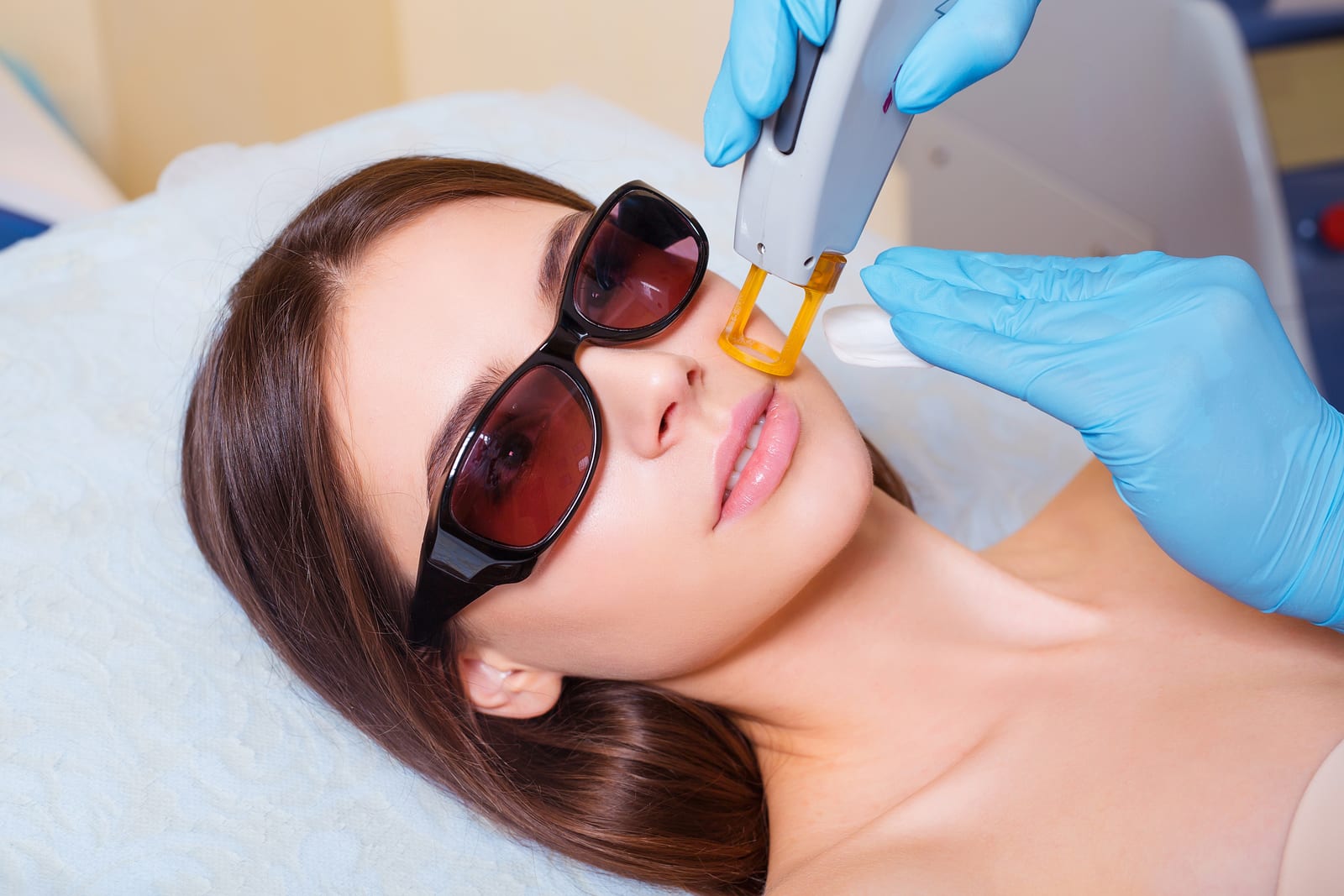
Vbeam Pro Laser in Bellevue, WA
Pulsed-dye laser for facial telangiectasia, rosacea, port-wine stains, and vascular concerns.
- Surgeon-Led
Every protocol reviewed through a fellowship-trained facial plastic surgeon's anatomical lens.
- Full Modality Array
Radiofrequency, ultrasound, IPL, picosecond, pulsed-dye, and a complete injectable menu in-house.
- Hospitality-Led
Founded in 2022 around a comfort-first, homey clinic standard — quiet luxury without corporate distance.
- Bellevue Crossroads
15600 NE 8th St, Suite A-8 — minutes from Mercer Island, Kirkland, and Redmond.
What Vbeam Pro Is
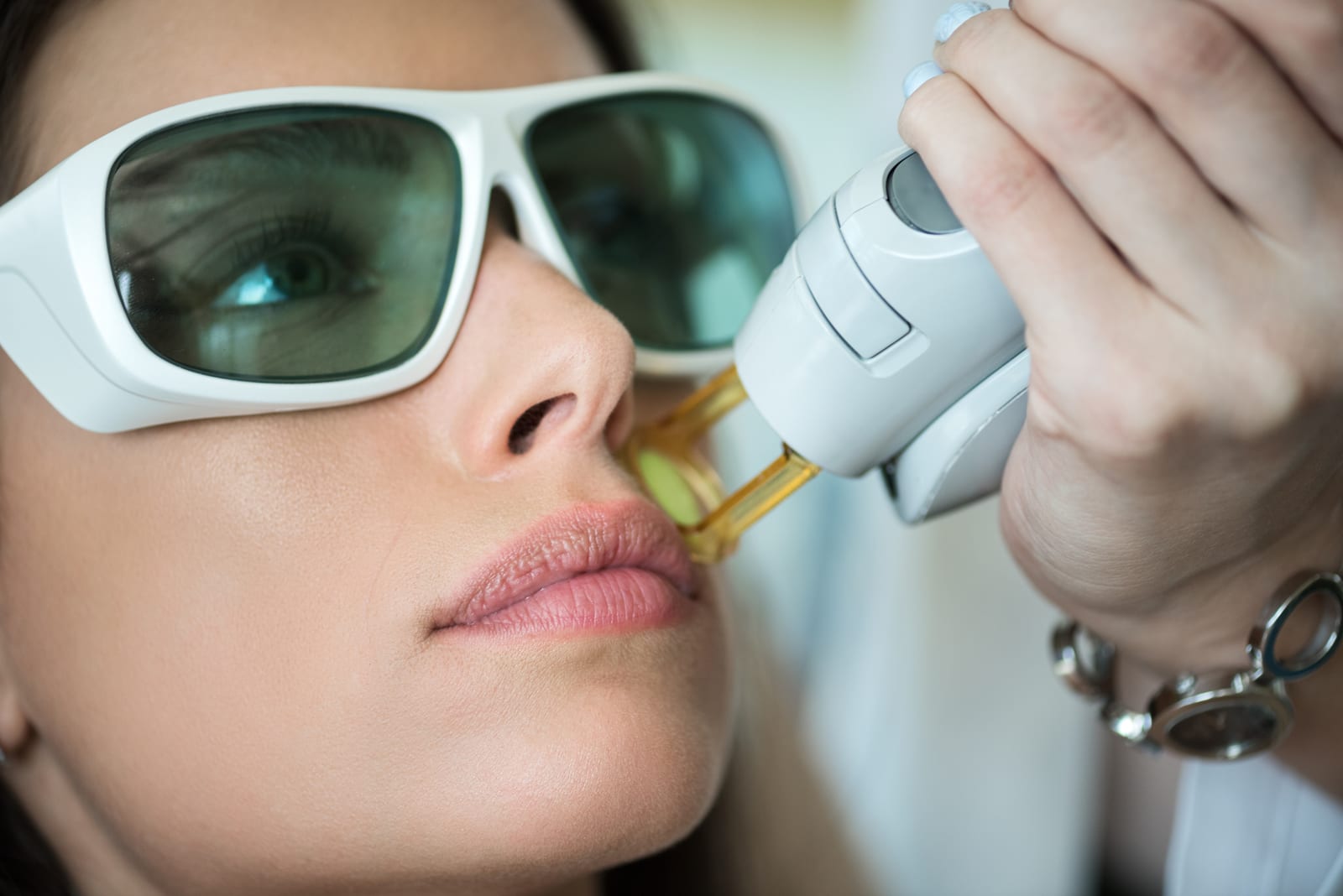
Vbeam Pro is a 595 nm pulsed-dye laser — the wavelength considered the clinical reference standard for vascular targeting. The reason the wavelength matters is selectivity. At 595 nm, the laser light is preferentially absorbed by oxyhemoglobin inside red blood cells in the targeted vessel.
Sun Aesthetic Clinic is a surgeon-led medical spa in Bellevue’s Crossroads district, and Vbeam Pro is the protocol we reach for when the clinical target is vascular — diffuse rosacea redness, broken capillaries on the cheeks or chest, a port-wine stain mapped at consultation, or a stubborn vascular scar component. The platform is a pulsed-dye laser (PDL) at a 595 nm wavelength selected for its preferential absorption by hemoglobin, and at the clinic it is operated against the same anatomical-precision standard we hold every energy-based protocol to.
What Vbeam Pro Is
Vbeam Pro is a 595 nm pulsed-dye laser — the wavelength considered the clinical reference standard for vascular targeting. The reason the wavelength matters is selectivity. At 595 nm, the laser light is preferentially absorbed by oxyhemoglobin inside red blood cells in the targeted vessel. The energy converts to heat inside the vessel wall, the vessel is coagulated, and the surrounding skin — which absorbs the wavelength far less — is spared.
Three technical elements define a clinical-grade Vbeam protocol, and all three are selected per patient at Sun Aesthetic Clinic:
- Wavelength — fixed at 595 nm by platform design, optimized for hemoglobin absorption. This is what makes Vbeam Pro a targeted vascular protocol rather than a broad-spectrum device.
- Pulse duration and fluence — the length of time energy is delivered and the energy density per pulse. Both are adjusted to the depth and caliber of the vessel being treated. A shallow telangiectasia on the cheek is not the same anatomical target as a deeper feeder vessel inside a port-wine stain, and the parameters are not the same.
- Integrated dynamic cooling — a cryogen cooling spray fires at the skin in synchrony with each pulse, protecting the epidermis from collateral thermal injury. This is the surface-protection layer that lets the protocol be run safely on the face and across a broader range of skin types than commodity vascular settings would attempt.
The combination — selective wavelength, anatomically calibrated pulse, and synchronized cooling — is what separates Vbeam Pro from broad-spectrum vascular work, and it is the layer the surgeon-led protocol review is built around.
What Vbeam Pro Treats
Vbeam Pro is built for the vascular target. The primary indications at the clinic:
- Rosacea — diffuse facial redness and flushing. The most common single reason patients book a Vbeam consultation. The protocol reduces the visible erythema and clears the fine telangiectatic vessels that make rosacea read on the skin. We will be honest about scope below — Vbeam manages rosacea; it does not cure the underlying condition.
- Broken capillaries (telangiectasias). Fine red vessels on the cheeks, nose, around the nostrils, on the chest (the “V” of the chest is one of the most-treated body areas), and on the legs. Small targeted vessels often clear in a single session; denser networks build clearance across a short series.
- Port-wine stains and congenital vascular lesions. Vbeam Pro is the standard-of-care laser for port-wine stains in the dermatologic literature. Treatment plans for vascular birthmarks are mapped at consultation with realistic expectations on session count and lightening trajectory.
- Cherry angiomas and small vascular lesions. Individual lesion clearance is often achievable in one to two sessions.
- Facial flushing — including stress-driven and trigger-driven flush patterns. Paired conversationally with the Botox in Bellevue protocol where flushing has a sweat-and-trigger overlap.
- Secondary indications — scars and stretch marks with a vascular component. Red, raised, or actively erythematous scars and stretch marks (particularly fresh striae rubrae) respond to Vbeam where the vascular component is dominant. Older, white, or atrophic lesions are routed to different protocols at consultation.
- Warts (off-label, vascular-targeting rationale). Reviewed case by case.
If your concern is broad-spectrum sun damage and mixed pigment-plus-redness across lighter skin types, the conversation will likely route toward Nordlys IPL in Bellevue instead. If the concern is pigment — sunspots, melasma, or tattoo — that conversation routes to PicoWay Laser in Bellevue. The three platforms are complementary, not interchangeable, and the consultation conversation is built around routing you to the right one.
What to Expect at Your Vbeam Session
A typical Vbeam Pro session at the clinic runs 15 to 45 minutes, depending on the area and the lesion map. A single cherry angioma is a short visit; a full-face rosacea session with cheek, nose, and chin coverage runs longer.
The sensation most patients describe is a quick rubber-band snap with each pulse, with the integrated cryogen cooling firing fractionally before each pulse to soften the surface sensation. Most patients tolerate the session comfortably without topical anesthetic; on larger sessions or sensitive areas, a topical numbing layer can be added to the prep.
Immediately after the session, the treated area is typically pink and slightly warm, similar to a mild sunburn, settling over a few hours.
The single most important honesty point on Vbeam is this: bruising is a possible and parameter-dependent outcome. Pulsed-dye lasers can be operated in two protocol ranges:
- A non-purpuric protocol — gentler fluences, no bruising, gradual clearance over a longer series. Preferred for patients who cannot accept visible downtime, public-facing professionals, and patients near a fixed-date event.
- A purpuric protocol — higher fluences that produce a transient purpura (a bruise-like discoloration) in the treated vessels, with stronger and faster clearance over fewer sessions. The purpura typically resolves over 7 to 14 days.
Neither protocol is the right answer for every patient. The choice is made at consultation, against your tolerance for downtime, your treatment goal, and the lesion type being treated. The clinic will not run a purpuric protocol on a patient who has asked for no downtime, and will not push a slow non-purpuric series on a patient whose lesion clinically warrants the stronger setting. That decision is part of the surgeon-led conversation.
Some patients see same-day clearance on small targeted vessels. More typically, clearance settles over 1 to 3 weeks as the body resorbs the coagulated vessels. A typical course is 3 to 5 sessions, spaced 4 to 6 weeks apart, with the exact session count mapped against the indication.
Why Surgeon-Led Protocol Selection Matters Here
Vbeam Pro is one of the protocols where commodity settings drift fastest. The platform is well-known, the indications are well-known, and the temptation is to run a single preset against every vascular concern that walks in the door. The result is the Vbeam market most patients have encountered — over-bruising on patients who did not want downtime, under-clearance on patients whose lesions needed a stronger setting, and uneven results across body areas.
Every Vbeam plan at Sun Aesthetic Clinic is reviewed by Albert Yang, MD — our fellowship-trained facial plastic surgeon — and Dr. Jay Sun, MD, founder and medical director. Dr. Yang trained through AAFPRS-recognized fellowships at Emory and Premier Image, with prior head-and-neck reconstructive surgery training, and his role on the branch is to set the parameter standard for every energy-based protocol on the menu. Anatomical precision on Vbeam means reading the vessel — depth, caliber, distribution — and selecting pulse duration, fluence, and cooling against that read, not against a vascular preset.
The clinic refuses one-size Vbeam protocols. Purpuric versus non-purpuric, session count, spacing, and the area-by-area parameter map are all decisions made with the patient in front of us.
Meet your fellowship-trained provider
Vbeam Pro vs Nordlys IPL vs PicoWay
The three advanced-rejuvenation lasers on the menu solve different problems, and the consultation conversation is built around routing you to the right one:
- Vbeam Pro (595 nm pulsed-dye) — the targeted vascular protocol. Rosacea, diffuse facial redness, broken capillaries, port-wine stains, vascular lesions, and scars with a dominant vascular component. Hemoglobin is the chromophore.
- Nordlys IPL in Bellevue (broad-spectrum intense pulsed light) — the broad photo-aging protocol. Mixed sun damage, diffuse pigment-plus-redness across lighter skin types, and overall tone-and-texture refresh. A broader-spectrum tool, used where the concern is mixed rather than purely vascular.
- PicoWay Laser in Bellevue (picosecond, photoacoustic) — the pigment and tattoo protocol. Sunspots, melasma support, and multi-color tattoo removal. A picosecond pulse mechanism that fragments pigment particles rather than thermally coagulating vessels.
The three platforms are complementary, not interchangeable. A face with rosacea redness and scattered sunspots is often best mapped as a combined plan — Vbeam for the vascular layer, PicoWay for the pigment layer — sequenced at consultation. The Advanced Skin Rejuvenation category hub holds the full cross-protocol context.
For the broader concern frames, see Sun damage, melasma & rosacea and Vascular, veins & tattoo removal — both pages route patients into the Vbeam conversation where the vascular component is dominant.
Frequently Paired With
Vbeam Pro sits inside a broader skin-quality conversation, and the protocols it most commonly pairs with at the clinic:
- Hydrafacial in Bellevue — the baseline skin protocol many Vbeam patients run alongside the series to support the surface during clearance.
- PicoWay Laser in Bellevue — sequenced for patients whose face carries both a vascular layer (Vbeam) and a pigment layer (PicoWay).
- Botox in Bellevue — paired conversationally where rosacea has a facial-flush and sweat-trigger overlap; Botox can quiet the trigger response while Vbeam clears the visible vessels.
- Vascular, veins & tattoo removal — the concern-page entry for vascular work across face and body.
- Sun damage, melasma & rosacea — the concern page for rosacea-routed patients.

The First Step Toward Natural-Looking Results
Every Vbeam Pro plan at Sun Aesthetic Clinic begins with an unhurried conversation, a vascular read, and a parameter map scaled to the indication and the downtime tolerance you've asked for. No vascular presets. No one-size protocols. Just refined, surgeon-reviewed pulsed-dye work in a single-location boutique practice in Bellevue Crossroads.
Frequently Asked
Will Vbeam Pro bruise me?
It depends on which protocol we run together. A non-purpuric protocol — gentler fluences over a longer series — produces no bruising and is the right answer for patients who cannot accept visible downtime. A purpuric protocol — higher fluences with stronger and faster clearance — produces a transient bruise-like discoloration (purpura) that typically resolves over 7 to 14 days. Neither is the universal right answer. The choice is made at consultation, against your tolerance for downtime, the indication, and the clearance trajectory you've asked for. The clinic will not run a purpuric protocol on a patient who has asked for no downtime.
Will Vbeam Pro cure my rosacea?
No, and we will be direct about that. Rosacea is a chronic inflammatory condition with vascular and trigger components; Vbeam manages the visible vascular component — the diffuse redness, the broken capillaries, the flushing — by clearing the vessels that read on the surface. The underlying condition can recur, and most rosacea patients benefit from a long-term plan that combines an initial Vbeam series, maintenance sessions one or two times a year, daily medical-grade skincare, and trigger management. We will map that long-term plan honestly at consultation rather than promising a one-and-done clearance.
Is Vbeam Pro safe on darker skin types (Fitzpatrick IV–VI)?
With careful parameter selection, yes — Vbeam's 595 nm wavelength is more skin-type friendly than many broad-spectrum vascular settings, and the integrated dynamic cooling adds an important surface-protection layer on darker skin. That said, the risk of post-inflammatory pigment change is real on Fitzpatrick IV–VI, and we will be honest about it. The conversation at consultation starts with a skin-type read and a parameter map built against your skin specifically, not against a preset. Where the clinical read is that Vbeam is not the right tool, we will say so and route the conversation.
When will I see results?
Some patients see same-day clearance on small targeted vessels. More typically, clearance settles over 1 to 3 weeks as the body resorbs the coagulated vessels. The visible result compounds across the series — most patients see meaningful redness reduction and vessel clearance by the second or third session, with consolidation across a 3-to-5-session course spaced 4 to 6 weeks apart.
Vbeam Pro vs Nordlys IPL — which one is right for me?
Vbeam is the targeted vascular protocol — pulsed-dye laser at 595 nm, hemoglobin chromophore. It is the right tool when the concern is rosacea redness, broken capillaries, port-wine stains, or vascular lesions specifically. Nordlys IPL is the broad-spectrum tool — better suited to mixed photo-aging, where the concern combines pigment, redness, and tone-and-texture refresh across lighter skin types. The consultation conversation will route you to the right one based on the read of your skin, not on a fixed answer.
How many sessions will I need?
A typical Vbeam Pro series is 3 to 5 sessions, spaced 4 to 6 weeks apart. Port-wine stains and dense vascular lesions can require longer courses. Single small vessels and individual cherry angiomas can clear in one to two sessions. The session count is mapped honestly at consultation against your specific indication.
Can I have Vbeam Pro during pregnancy?
We defer Vbeam during pregnancy out of an abundance of caution, even though no direct fetal-risk mechanism has been established in the literature for 595 nm light. The conversation can resume postpartum and (where applicable) outside the breastfeeding window for periorbital and chest work.
Is pricing on the site?
Pricing is shared in the complimentary consultation rather than published on the page. Vbeam plans are indication-driven, area-driven, and session-count-driven — the right number depends on the vascular target, the protocol path (purpuric versus non-purpuric), and the maintenance cadence we map together. A clear written estimate is provided at consultation, and there is no obligation to proceed the same day.
Related treatments in your category.
Ultherapy
Micro-focused ultrasound for foundational SMAS-layer lifting — non-surgical brow, jawline, and neck refinement.
Learn more Advanced Skin RejuvenationThermage
Monopolar radiofrequency for non-surgical skin tightening across the face and body.
Learn more Advanced Skin RejuvenationAgnes RF
Microinsulated radiofrequency for targeted submental fat, eye-area laxity, and acne lesions.
Learn more Advanced Skin RejuvenationXERF
Bipolar radiofrequency device for surface skin tightening and texture refinement.
Learn more Advanced Skin RejuvenationScarlet RF
Microneedling-delivered radiofrequency for tightening, scar refinement, and texture.
Learn more Advanced Skin RejuvenationONDA PRO
Targeted Coolwaves® microwave energy for full body contouring, submental fat reduction, and skin tightening.
Learn morePricing is shared in consultation.
Our pricing is a function of the protocol your anatomy actually needs — not a menu line item. We share specifics during your complimentary consultation, where every cost is contextualized inside the plan it belongs to. Financing options are available for protocols of greater scope.
