
Dermaplaning in Bellevue, WA
Manual exfoliation — vellus hair and dead-skin removal for same-visit smoothness and product penetration.
- Surgeon-Led
Every protocol reviewed through a fellowship-trained facial plastic surgeon's anatomical lens.
- Full Modality Array
Radiofrequency, ultrasound, IPL, picosecond, pulsed-dye, and a complete injectable menu in-house.
- Hospitality-Led
Founded in 2022 around a comfort-first, homey clinic standard — quiet luxury without corporate distance.
- Bellevue Crossroads
15600 NE 8th St, Suite A-8 — minutes from Mercer Island, Kirkland, and Redmond.
What Dermaplaning Is
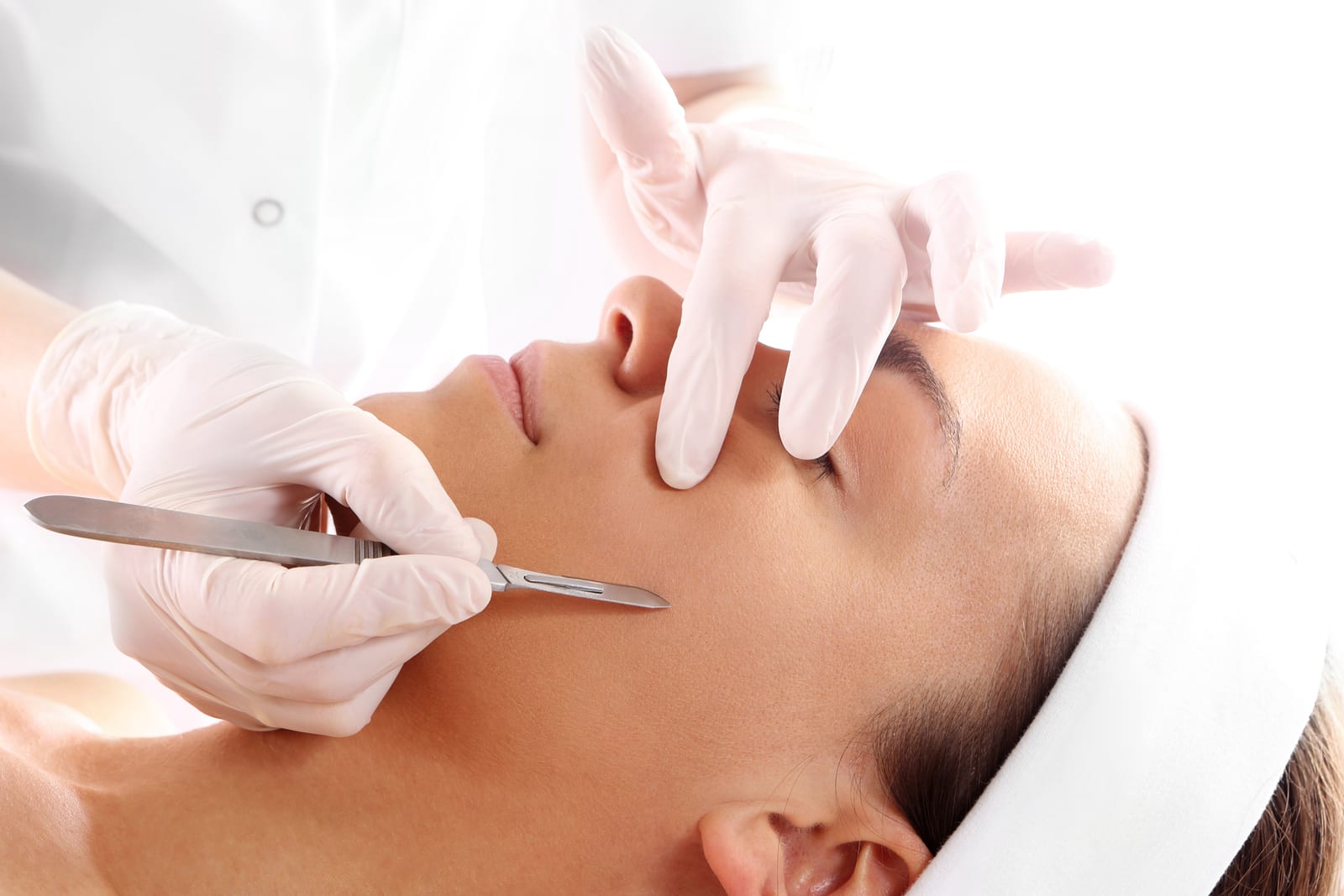
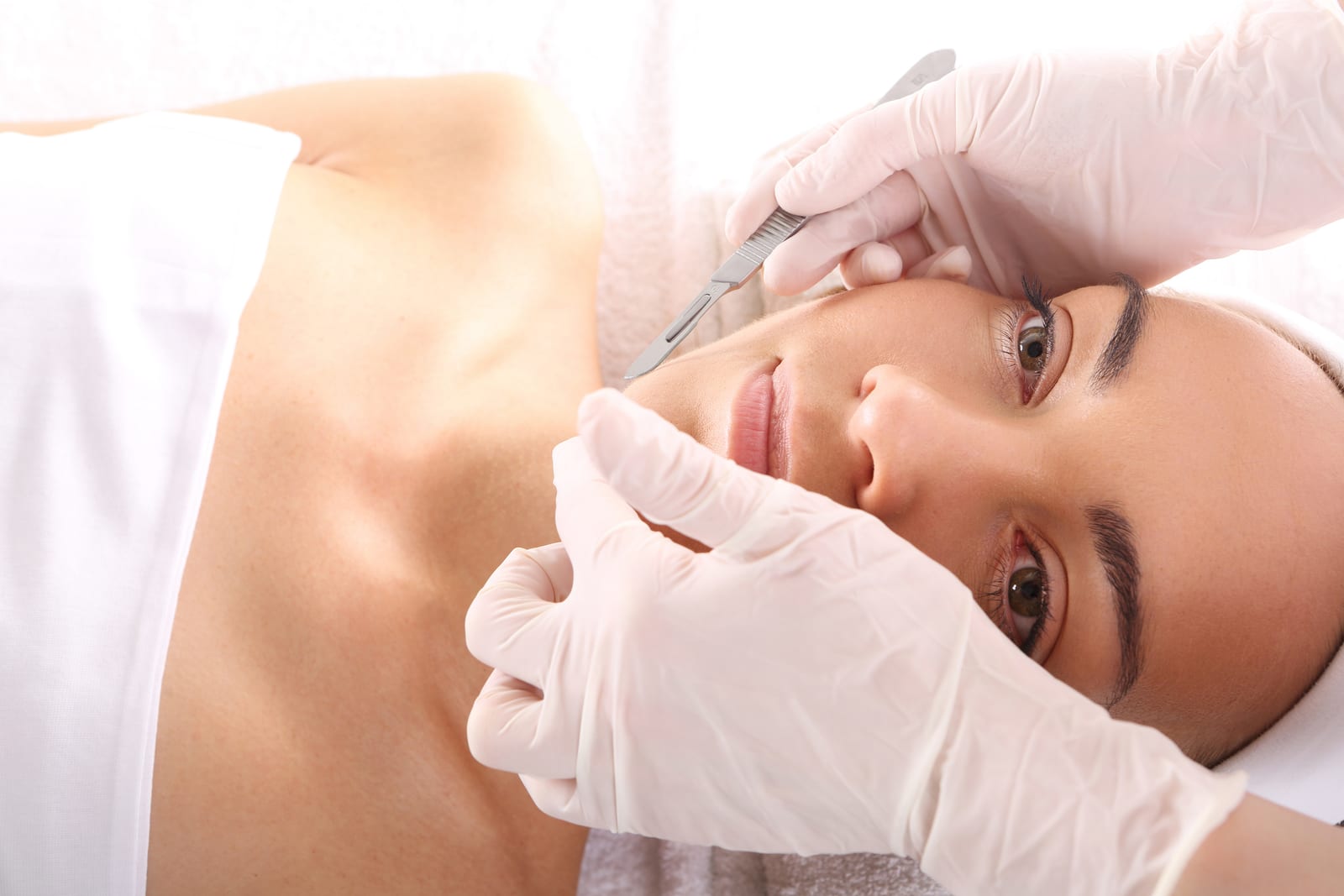
Dermaplaning is a manual physical exfoliation performed with a sterile, single-use surgical blade held at a precise angle against the skin. The pass lifts away the stratum corneum — the outermost layer of dead keratinocytes that build up on the skin's surface — along with the fine vellus hair ("peach fuzz") that grows across the face. There is no chemistry, no heat, and no needle involved.
Sun Aesthetic Clinic is a surgeon-led medical spa in Bellevue’s Crossroads district, and dermaplaning is the lightest-touch protocol inside our Clinical Skin Care category. It is the surface-refinement step — a sterile-blade pass that lifts the outermost layer of dead skin cells and fine vellus hair in a single session — and it is one of the most universally satisfying treatments we offer because the read on the skin is visible within minutes and the downtime is essentially none. The deeper value of dermaplaning, though, is structural. It is the protocol that makes every other Clinical Skin Care protocol work better.
What Dermaplaning Is
Dermaplaning is a manual physical exfoliation performed with a sterile, single-use surgical blade held at a precise angle against the skin. The pass lifts away the stratum corneum — the outermost layer of dead keratinocytes that build up on the skin’s surface — along with the fine vellus hair (“peach fuzz”) that grows across the face. There is no chemistry, no heat, and no needle involved. It is a clinical-grade mechanical refinement of the skin’s top layer.
Three things happen at once.
- Surface smoothing. Removing the dead-cell layer immediately changes how light reflects off the skin. The texture you can feel under your fingertips is finer; the read in the mirror is softer and more luminous.
- Better product absorption. Serums, retinoids, and active topicals penetrate a freshly resurfaced skin surface far more effectively than they do a skin surface insulated by buildup. This is the single biggest reason dermaplaning is often sequenced as a prep step.
- A same-day brightening read. Vellus hair scatters light. When it is removed, the skin reads brighter and makeup sits more cleanly across the surface. This is the effect most patients notice walking back out to the parking lot.
What dermaplaning is not: a deep treatment. It does not address pigment in the dermis, it does not stimulate collagen at depth, and it does not soften dynamic lines. It is a refined surface protocol — honest about its scope, and exceptionally good at the scope it owns.
Treatment Areas and Candidacy
The face is the primary treatment area. The protocol is most commonly performed across the forehead, cheeks, jawline, chin, and along the upper lip and sides of the nose. Dermaplaning is not performed on the eyelids, the lash line, or inside the nostrils.
Most adults with healthy, intact skin are good candidates. The protocol is well tolerated across a wide range of skin types and tones because it is purely mechanical — no chemical reaction, no heat, no melanin-sensitive energy.
Dermaplaning is not the right protocol for:
- Active inflammatory or cystic acne — the blade cannot safely pass over live lesions, and the protocol can spread bacteria across the surface.
- Open cuts, abrasions, sunburn, or active cold sores in the treatment field.
- Patients within the post-isotretinoin window — recent oral retinoid use significantly changes how the skin tolerates exfoliation, and we hold dermaplaning until the skin has fully recovered.
- Certain skin conditions (active rosacea flares, eczema, dermatitis in the treatment field) where the surface barrier is already compromised.
The candidacy read is part of the consultation. If dermaplaning is not the right protocol on the day you arrive, we will say so and route you to the protocol that is.
What to Expect
A typical dermaplaning session at the clinic runs 30 to 45 minutes door-to-door, and the visit profile is one of the simplest on the MedSpa branch.
- In-session experience. The skin is cleansed and prepped. The sterile blade is passed across the treatment field in short, controlled strokes. Most patients describe the sensation as a light scraping with no discomfort — comparable to the feel of an electric toothbrush against the skin.
- Same-day result. The refined surface read is visible within minutes of the protocol ending. Skin looks smoother, brighter, and more even; makeup, if applied, sits more cleanly.
- Downtime. Effectively none. Most patients return directly to work or to the rest of their day.
- Aftercare. Standard sun protection is the only non-negotiable. Freshly resurfaced skin is more receptive to UV exposure for the first 48 hours; SPF is essential. We hold off on retinoids and active acid exfoliants for 48 to 72 hours and reintroduce them once the surface barrier has fully reset.
- Ongoing cadence. Most patients settle into a rhythm of every 4 to 6 weeks, which tracks the natural skin-cell turnover cycle. More frequent passes are not more effective — the skin needs the cycle to complete.
How Dermaplaning Fits a Larger Plan
The most strategic use of dermaplaning is rarely as a standalone treatment. It is as a sequencing step inside a broader Clinical Skin Care plan.
As a baseline prep. Removing the dead-cell layer immediately before another resurfacing protocol meaningfully changes the depth and evenness of that protocol’s effect. Dermaplaning is frequently sequenced as the prep pass before a chemical peel — the peel solution reaches a uniform surface and works more evenly. It is similarly used to prep the skin before microneedling sessions, where smoother surface contact improves treatment consistency, and before a Hydrafacial in Bellevue when the goal is the deepest possible serum infusion in a single visit.
As a finishing-touch refinement. On its own, dermaplaning is the gentle, low-disruption protocol most patients reach for in the week before an event, a photoshoot, or a milestone. It is also the protocol many patients sequence at the tail end of a longer treatment plan — a refined surface read after the deeper work has done its job.
As the makeup-application prep. Foundation, tinted moisturizer, and concealer sit differently on a freshly resurfaced surface. The read patients describe is “the makeup actually looks like skin.”
Within the broader Clinical Skin Care plan, dermaplaning often runs alongside microneedling for collagen-stimulating depth, and is occasionally sequenced with surface-renewal PRP protocols on the Vampire Facial page when the conversation is about a same-week refresh before a longer event window.
Common Misconceptions
Two myths come up in nearly every dermaplaning consultation. Both deserve a straight answer.
“Won’t my hair grow back darker and thicker?” No. This is the single most common concern, and the answer is anatomically straightforward. The fine vellus hair on the face is biologically distinct from terminal hair (the coarser, pigmented hair on the scalp, brows, and body). Cutting vellus hair at the skin surface does not change the follicle, the hair shaft, or the regrowth profile. The hair grows back at the same texture, the same color, and at the same rate it always has. What changes is the perception — a freshly cut edge can feel briefly different to the touch as it grows back in, but the strand itself has not changed.
“I can do this at home with a kit.” At-home dermaplaning kits exist, and they are not the same protocol. The clinical version uses a single-use sterile surgical blade, a trained read of blade angle and pressure against the anatomy of the specific face in front of us, sterile field protocols, and a post-care plan calibrated to what the skin just went through. The at-home version uses a duller blade, no sterile field, and no clinical read — which is why the most common at-home outcomes are uneven exfoliation, micro-cuts, and surface irritation. The same-day refinement read patients describe walking out of a clinical session is the result of all three elements — blade quality, technique, and aftercare — working together.
Frequently Paired With
Dermaplaning is the surface step inside a broader Clinical Skin Care conversation. The protocols it most commonly pairs with at the clinic:
- Hydrafacial in Bellevue — surface refinement paired with deep cleansing, hydration, and serum infusion in a single visit.
- Chemical Peels in Bellevue — dermaplaning as the prep pass that lets the peel solution reach a more uniform surface.
- Microneedling — surface refinement and collagen-stimulating depth sequenced across a treatment plan.
- Botox in Bellevue — a frequent same-week pairing when patients want their full pre-event refresh in a single visit.
- Pre-event and makeup-application prep — sequenced 1 to 3 days before the date for the cleanest possible foundation finish.

The First Step Toward Natural-Looking Results
Dermaplaning is the lightest-touch protocol on the Clinical Skin Care branch, and it is one of the most strategic. Whether it is the prep pass before a deeper protocol, the finishing-touch refinement at the end of a longer plan, or a same-week refresh before an event, the right answer is built around the rest of your skin plan — not around dermaplaning in isolation. Every Clinical Skin Care plan at Sun Aesthetic Clinic is reviewed under our surgeon-led standard by our fellowship-trained facial plastic surgeon, with anatomical precision applied to the surface read as carefully as to the deeper protocols on the branch.
Frequently Asked
Will my hair grow back darker or thicker after dermaplaning?
No. The vellus hair on the face is anatomically distinct from terminal hair and regrows at the same color and texture it had before the protocol. The myth persists because a freshly cut edge can feel briefly different to the touch, but the strand itself does not change.
Is dermaplaning safe during pregnancy?
Generally yes — dermaplaning is purely mechanical, with no chemical, heat, or systemic component, which makes it one of the protocols most often cleared during pregnancy. We confirm at consultation and coordinate with your OB if there is any specific concern.
I have acne-prone skin. Can I still have dermaplaning?
It depends on what the skin is doing on the day of the visit. Clear or comedonal skin is generally fine. Active inflammatory or cystic acne is a hold — the blade cannot safely cross active lesions. If the acne profile is in between, we read the skin in person and route accordingly.
How often should I have dermaplaning done?
The standard rhythm is every 4 to 6 weeks, which mirrors the natural skin-cell turnover cycle. More frequent sessions do not produce more refined results — the skin needs the cycle to complete to repopulate the surface layer that the protocol refines.
Is pricing published on the page?
Pricing is shared in the complimentary consultation rather than published on the page. Dermaplaning is most often planned as part of a Clinical Skin Care sequence, and the right answer depends on whether it is running standalone, as a prep step inside a larger session, or on a recurring cadence. A clear written estimate is provided at consultation.
At-home dermaplaning kit versus a clinical session — what is the actual difference?
Blade quality, sterile-field protocol, clinical read of angle and pressure against the anatomy, and a calibrated aftercare plan. At-home kits use duller blades, no sterile field, and no clinical oversight — which is why uneven exfoliation and surface irritation are the common at-home outcomes. The clinical version is built around all four elements working together.
Related treatments in your category.
Hydrafacial
Multi-step clinical facial — exfoliation, extraction, and serum infusion under one device.
Learn more Clinical Skin CareCandela Glace Facial
Korean-style clinical facial built on diamond-crushed tip technology, cupping lymphatic drainage, and a "glassy" final touch to the skin — same-visit glow with no downtime.
Learn more Clinical Skin CareVampire Facial
Microneedling combined with platelet-rich plasma — refined texture, tone, and luminosity over a treatment series.
Learn more Clinical Skin CareChemical Peels
Glycolic, salicylic, and TCA peel protocols titrated to skin type and concern.
Learn more Clinical Skin CareMicroneedling
Collagen induction therapy for texture refinement, scar revision, and pore quality.
Learn more Clinical Skin CareTargetCool
Cryo-modulated skin therapy for redness, sensitivity, and post-procedure recovery.
Learn morePricing is shared in consultation.
Our pricing is a function of the protocol your anatomy actually needs — not a menu line item. We share specifics during your complimentary consultation, where every cost is contextualized inside the plan it belongs to. Financing options are available for protocols of greater scope.
