
PRP in Bellevue, WA
PRP (platelet-rich plasma) is our autologous regenerative therapy for skin, hair, and scar revision. When structural volume is needed, it is transformed into DermaPRP — a biofiller injected like a dermal filler.
- Surgeon-Led
Every protocol reviewed through a fellowship-trained facial plastic surgeon's anatomical lens.
- Full Modality Array
Radiofrequency, ultrasound, IPL, picosecond, pulsed-dye, and a complete injectable menu in-house.
- Hospitality-Led
Founded in 2022 around a comfort-first, homey clinic standard — quiet luxury without corporate distance.
- Bellevue Crossroads
15600 NE 8th St, Suite A-8 — minutes from Mercer Island, Kirkland, and Redmond.
What PRP Is — and When It Becomes DermaPRP
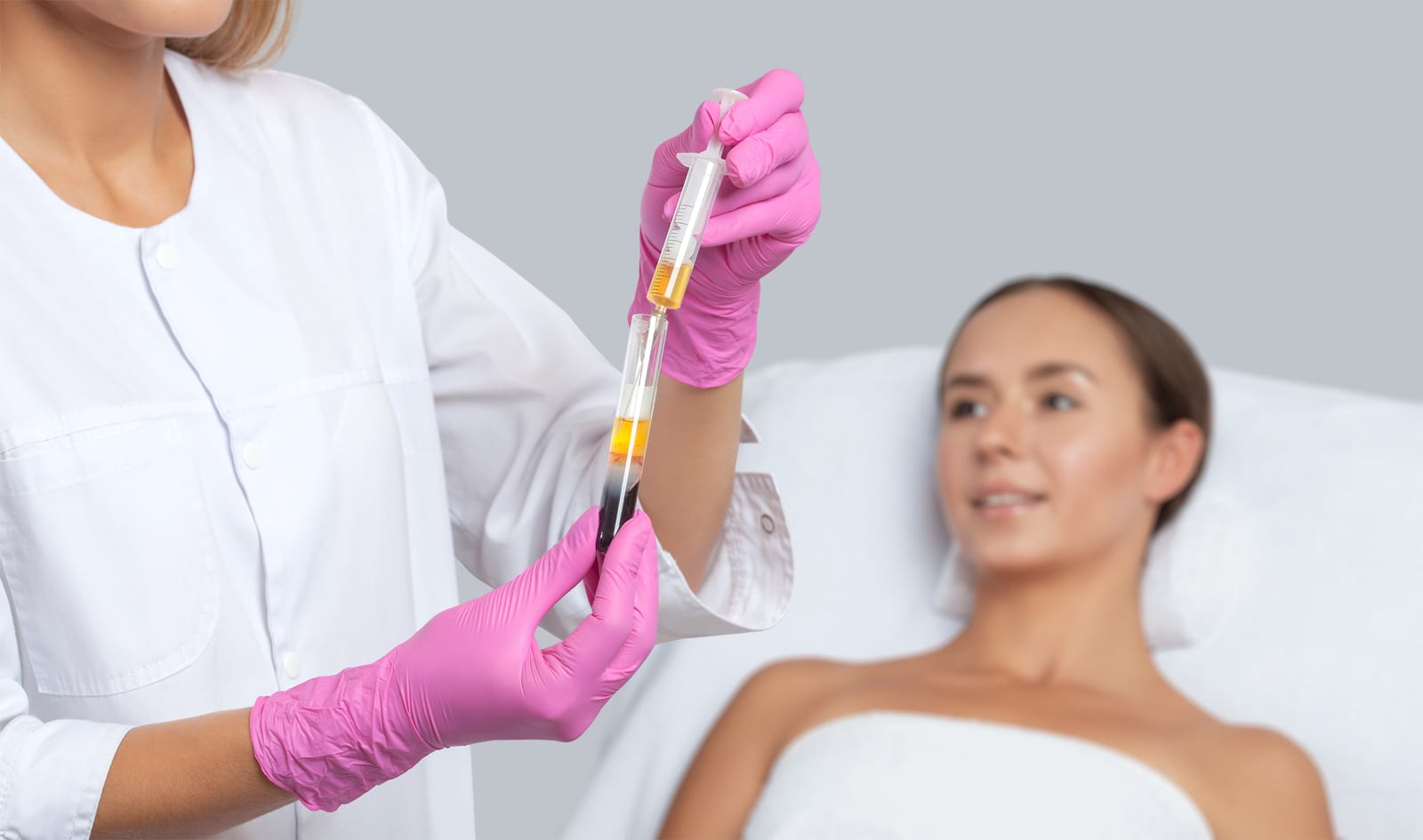
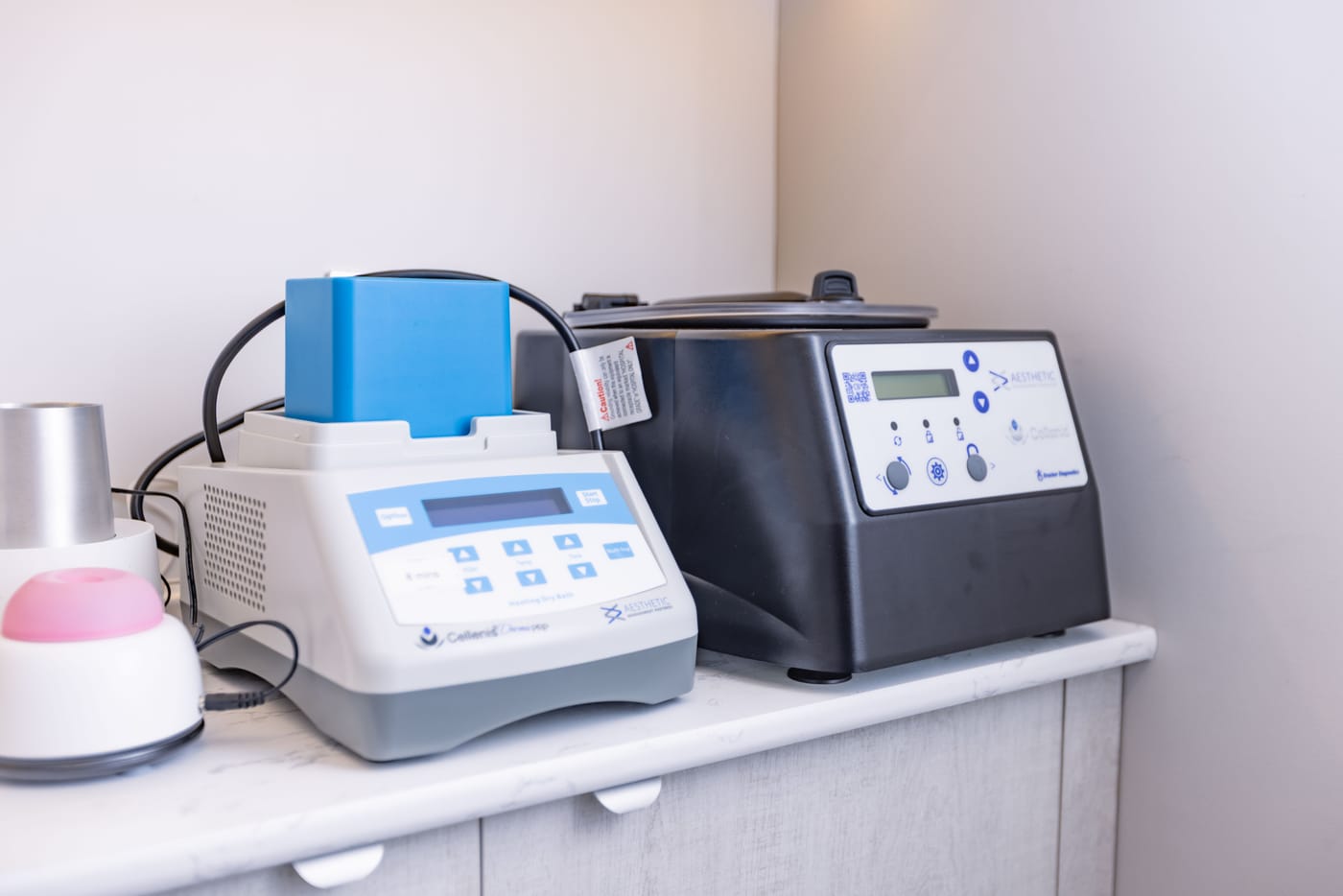
PRP is built on a simple biological premise. A small volume of your own blood is drawn, processed in-clinic to isolate its platelet-rich fraction, and reintroduced to the treatment area. The concentrated platelets signal a regenerative response — new collagen, new vasculature, more resilient skin and follicular architecture. The platelets do not do the work themselves; they recruit it.
PRP — platelet-rich plasma — is Sun Aesthetic Clinic’s regenerative anchor protocol, used across facial rejuvenation, hair restoration, and combination work with microneedling and energy-based modalities. When structural volume is needed, the same plasma is transformed into DermaPRP, a biofiller injected like a dermal filler. Every protocol is reviewed through the anatomical lens of a fellowship-trained facial plastic surgeon, which is the part of the offer most clinics in the region cannot match.
What PRP Is — and When It Becomes DermaPRP
PRP is built on a simple biological premise. A small volume of your own blood is drawn, processed in-clinic to isolate its platelet-rich fraction, and reintroduced to the treatment area. The concentrated platelets signal a regenerative response — new collagen, new vasculature, more resilient skin and follicular architecture. The platelets do not do the work themselves; they recruit it.
When the indication calls for more than regeneration — larger volume deficits, deeper hollows, bigger empty spaces that need structural support — we transform the plasma into DermaPRP: a biofiller form of your own PRP, injected like a dermal filler. The result carries the properties of both worlds — the volumizing behavior of a filler and the regenerative signaling of PRP. Which form your plan uses is a consultation decision, and the surgeon-led review layer is what holds that standard in place across the application domains below.
Application 1 — Facial Rejuvenation
The facial protocol is one of the most versatile regenerative tools in the menu. Patients with skin-quality concerns — texture, fine lines, post-inflammatory pigment after a breakout cycle, the mild laxity that arrives in the mid-thirties before structural work becomes the answer — tend to leave the consultation with this as either the anchor service or the layer underneath another modality.
Placement is anatomically mapped, not pattern-injected. Depth varies across the periorbital zone, the mid-face, and the perioral region; reintroduction technique shifts between superficial microchannel delivery and deeper injection depending on what the tissue is asking for. Albert Yang, our fellowship-trained facial plastic surgeon (AAFPRS, Emory and Premier Image), sets the standard, and that anatomical precision is the difference between a result that integrates and one that under-delivers.
For patients whose primary interest is texture and surface refinement, the Vampire Facial (microneedling + PRP) in Bellevue is the cross-modality protocol that combines microneedling channels with a topical application — a different delivery mechanism for similar regenerative intent.
Application 2 — Hair Restoration
The second major application domain is scalp protocols for early thinning, hairline recession, and follicular vitality. Hair restoration is one of the most-asked-about services at the clinic, particularly among male patients in their thirties and forties tracking early-pattern thinning at the crown or the temples.
Concentrated growth factors are reintroduced directly into the follicular environment, which can extend the active growth phase of existing follicles and support the density of the surrounding scalp tissue. The protocol is widely used off-label for early hair thinning — not as a hair-loss “cure,” and not a substitute for a surgical transplant when the anatomy has progressed past what regenerative work can reach. The honest framing matters: it is at its best in early-stage thinning, where there is still follicular activity to amplify.
If hair restoration is your primary concern, our hair restoration treatment landing maps the broader sequence — regenerative injection, exosome therapy, peptide protocols — into a layered plan. For male patients specifically, the For Men page covers the discretion-and-protocol pattern most of our male hair-restoration intake follows.
Application 3 — Combination Protocols
The regenerative layer rarely lives alone. Three combination patterns come up repeatedly in the clinic:
- Microneedling + topical application. The Vampire Facial technique — microneedling channels with a topical platelet-rich plasma layer — sits in our Clinical Skin Care category as its own protocol. See Vampire Facial (microneedling + PRP) in Bellevue for the technique-specific page.
- Post-laser recovery support. After a resurfacing laser pass, a regenerative layer can support the healing response and shorten the visible-recovery window. The combination is sequenced as part of the broader facial aging & sagging treatment plan when energy-based work is the primary modality.
- Radiofrequency microneedling + regenerative layer. After an Agnes RF or similar radiofrequency microneedling pass, the regenerative protocol over the channels can support collagen-stimulation depth and recovery comfort.
The intersection with the Wellness branch is worth naming. Patients on a longer-horizon regenerative plan often pair the protocol with peptide therapy on the Wellness side for compounded effect across both surface aesthetic and systemic vitality. The regenerative-medicine logic is shared, anchored by Dr. Jay Sun’s anesthesiology-plus-regenerative-medicine background.
Application 4 — Other Aesthetic and Functional Medicine Applications
The regenerative logic is not limited to the face and scalp. The same platelet-rich plasma foundation supports a wider set of aesthetic and functional medicine applications, each planned under physician oversight:
- Neck, décolletage, hands, and body scars. The facial rejuvenation logic extends to the skin-quality zones that most often reveal age or history — crepe-prone neck and décolletage skin, the backs of the hands, and the texture of body scars.
- Female clitoral and vaginal rejuvenation. A physician-led functional medicine application of the regenerative protocol focused on intimate wellness. Candidacy, expectations, and protocol details are discussed privately in consultation.
- Joint space and wound healing. On the functional medicine side, the same growth-factor signaling is applied to joint-space support and wound-healing protocols, reviewed and sequenced by our physicians.
These applications are consultation-first by design — candidacy and sequencing are set in a physician review before any protocol is booked.
Protocol Expectations
A typical series is three sessions, spaced four to six weeks apart. Results integrate gradually — most patients see surface-level change at six to eight weeks and the fuller integrated result at the two-to-six-month window. Longevity tends to run twelve to eighteen months, after which an annual maintenance session keeps the regenerative layer current.
Each session runs roughly sixty to ninety minutes from blood draw to reinjection. The draw, the in-clinic processing, and the reintroduction happen in a single visit; there is no “come back tomorrow” step. Downtime is minimal — most patients experience brief redness or pinpoint marks at the injection sites for a day, with normal activity resumable immediately. Pricing is shared in consultation; protocol-driven and scaled to the indication.
Why PRP Here, Not Generic Platelet-Rich Plasma Elsewhere
The result is technique-dependent. Three variables shape the regenerative outcome:
- Concentration and fraction selection. The processing step is not uniform across clinics. Platelet density delivered to the tissue, and the leukocyte fraction included or excluded, both shape what the tissue does with the input.
- Depth and pattern of reintroduction. Superficial microchannel delivery, intradermal fine-gauge injection, and deeper follicular-layer scalp work are three different techniques. Depth that is off by a millimeter is depth that is off.
- Indication-specific protocol design. Facial, scalp, and microneedling-combined sequences are distinct protocols — not one sequence with three applications. The surgeon-led review layer is what keeps the distinction intact.
This is why patients who have tried regenerative therapies elsewhere often describe a different quality of result here.
Frequently Paired With
- Botox & wrinkle relaxers — Surface-line softening that pairs naturally with a regenerative layer underneath.
- Vampire Facial (microneedling + PRP) in Bellevue — The microneedling-plus-regenerative-layer combination as a separate protocol surface.
- Agnes RF — Radiofrequency microneedling sequenced with a regenerative recovery layer for jawline, periorbital, or acne-scar work.
- Hair restoration treatment — The concern landing that integrates regenerative injection, exosome therapy, and peptide protocols into a layered plan.
- Medical Injectables category — The category hub where the regenerative protocol sits alongside the rest of the injectable menu.
Provider Authority
Albert Yang is a fellowship-trained facial plastic surgeon — AAFPRS-recognized fellowship through Emory and Premier Image, with prior head-and-neck reconstructive surgery training at UNLV. He sets and reviews the protocol standard at the clinic: concentration, depth, pattern, indication selection.
Dr. Jay Sun, MD — founder and medical director — anchors the regenerative-medicine side of the protocol. His anesthesiology background informs the comfort technique used across the blood-draw step, and his regenerative-medicine training informs the broader protocol selection logic across the regenerative menu.
Meet your fellowship-trained provider · Visit our Bellevue Crossroads clinic

The First Step Toward Natural-Looking Results
Every protocol at Sun Aesthetic Clinic begins the same way — an unhurried conversation, a careful read of your anatomy and your indication, and a regenerative plan scaled to your goals. No same-day-pressure decisions. No upsell scripts.
Frequently Asked
What is the difference between PRP and DermaPRP?
PRP is the standard protocol — your own platelet-rich plasma reintroduced to skin or scalp to signal a regenerative response. DermaPRP is what we create when structural volume is needed: the plasma is transformed into a biofiller and injected like a dermal filler, combining the volumizing property of a filler with the regenerative property of PRP. The consultation determines which form your indication calls for.
Does it hurt?
Discomfort is generally mild. The blood draw is handled with anesthesiology-grade comfort technique; topical numbing is applied to the treatment area before reintroduction; the reinjection itself is brief. Most patients describe the experience as easier than they expected, particularly for the scalp protocol.
What is the recovery window?
Minimal. Most patients experience brief redness or pinpoint marks at the injection sites for a day; normal activity is resumable immediately and visible recovery is typically complete within twenty-four to forty-eight hours. Combination protocols carry the recovery profile of the partner modality rather than the regenerative layer itself.
How many sessions will I need, and when will I see results?
A typical series is three sessions spaced four to six weeks apart. Surface-level change tends to register at six to eight weeks; the fuller integrated result lands in the two-to-six-month window; longevity sits in the twelve-to-eighteen-month range. An annual maintenance session is the most common cadence after the initial series.
Is the hair protocol different from the facial protocol?
Yes. The facial protocol is anatomically mapped across the periorbital zone, mid-face, and perioral region with depth and pattern adjusted to each. The scalp protocol uses a follicular-layer microinjection pattern across the thinning zone. The regenerative input is shared; the technique is indication-specific.
Is it safe? Is it regulated?
The protocol uses your own blood, which removes the donor-material risk class entirely. Platelet-rich plasma is widely used in clinical practice as a regenerative therapy; the hair-restoration application is considered off-label and is framed accordingly at consultation. Every protocol is reviewed for medical-history fit before treatment.
Vampire Facial versus a standalone PRP session — what's the difference?
The Vampire Facial (microneedling + PRP) in Bellevue combines microneedling channels with a topical regenerative layer — the channels are the delivery mechanism. A standalone session uses injection or microinjection instead. Same regenerative molecule, different technique. Many patients use both at different points in a longer plan.
Is pricing published on the site?
Pricing is shared in your consultation rather than on the page — protocol-driven and scaled to the indication. Financing options are available through our financing page.
Related treatments in your category.
Botox & Wrinkle Relaxers
Wrinkle-relaxer treatments — Botox, Dysport, and refined neuromodulator alternatives — placed with anatomical precision by a fellowship-trained surgeon's lens.
Learn more Medical InjectablesDermal Fillers
Hyaluronic acid filler placement for lips, midface, jawline, and structural rejuvenation — calibrated to anatomy, never templated.
Learn more Medical InjectablesSculptra
Poly-L-lactic acid biostimulator that gradually restores collagen architecture over a series of treatments.
Learn more Medical InjectablesRadiesse
Calcium hydroxylapatite biostimulator for jawline contour, hand rejuvenation, and structural lift.
Learn more Medical InjectablesNano Fat Stem Cell Therapy
Surgeon-administered autologous nano fat protocol for facial regeneration and skin quality.
Learn morePricing is shared in consultation.
Our pricing is a function of the protocol your anatomy actually needs — not a menu line item. We share specifics during your complimentary consultation, where every cost is contextualized inside the plan it belongs to. Financing options are available for protocols of greater scope.
