
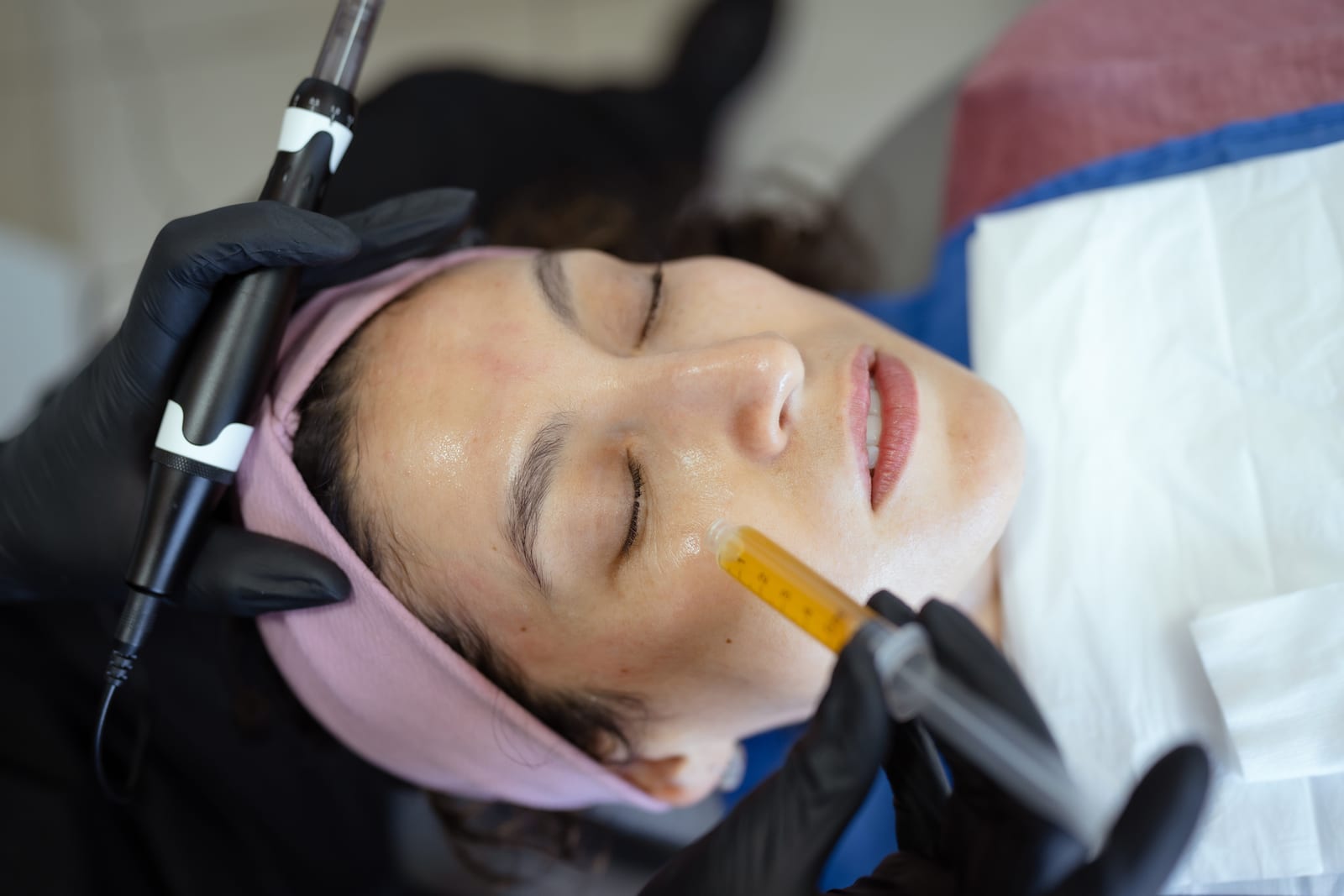
Vampire Facial in Bellevue, WA
Microneedling combined with platelet-rich plasma — refined texture, tone, and luminosity over a treatment series.
- Surgeon-Led
Every protocol reviewed through a fellowship-trained facial plastic surgeon's anatomical lens.
- Full Modality Array
Radiofrequency, ultrasound, IPL, picosecond, pulsed-dye, and a complete injectable menu in-house.
- Hospitality-Led
Founded in 2022 around a comfort-first, homey clinic standard — quiet luxury without corporate distance.
- Bellevue Crossroads
15600 NE 8th St, Suite A-8 — minutes from Mercer Island, Kirkland, and Redmond.
What the Vampire Facial Is
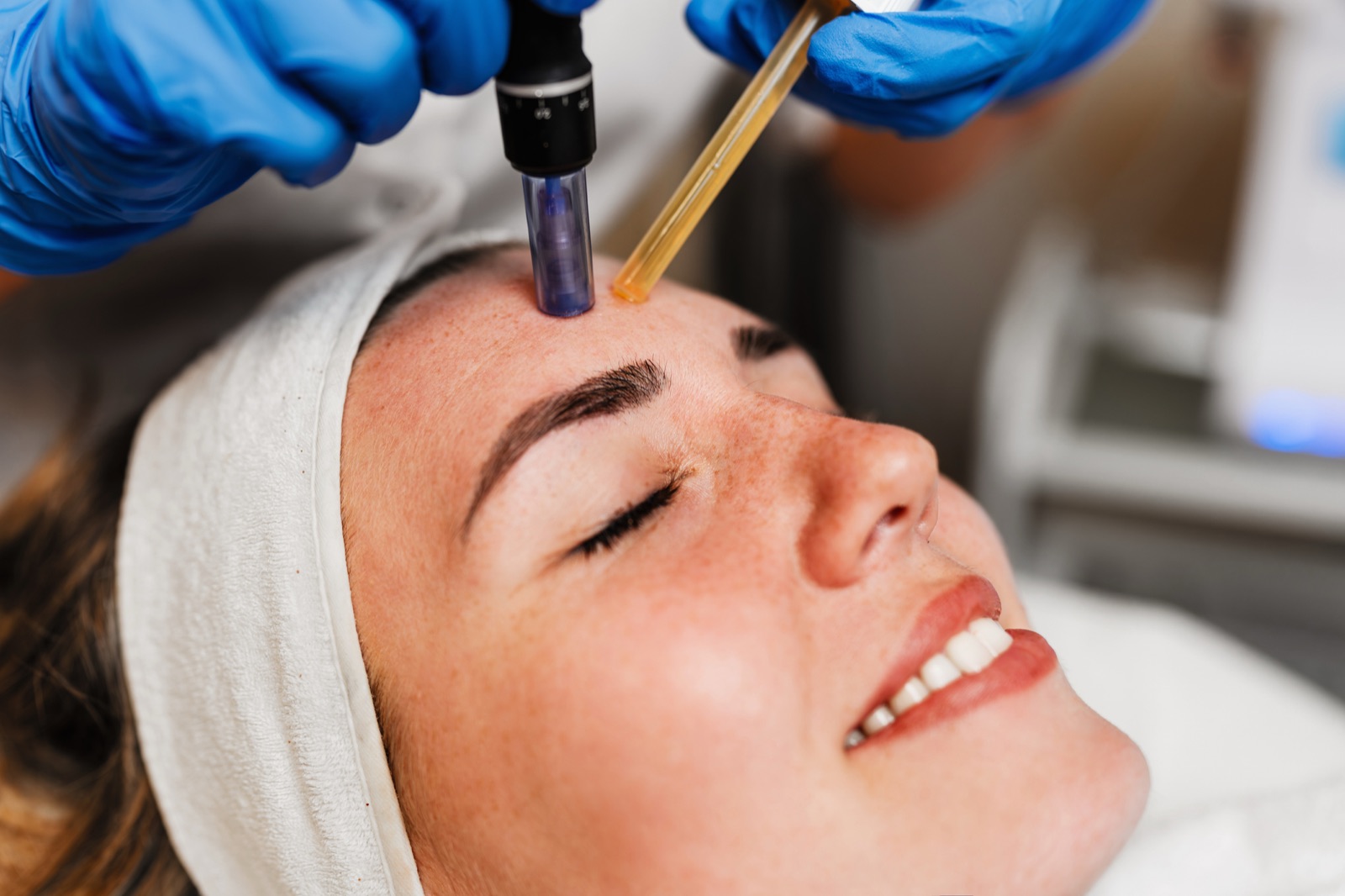
The Vampire Facial is the well-known technique name — first formalized by Charles Runels, MD — for microneedling combined with a topical autologous growth-factor layer. At Sun Aesthetic Clinic, the protocol is the surgeon-reviewed intersection of two standalone services on the menu: Microneedling in Bellevue and the standalone PRP protocol.
The Vampire Facial is the established consumer name for a protocol that sits at the intersection of two regenerative tools on our Clinical Skin Care menu — microneedling on the collagen-induction layer, and PRP (platelet-rich plasma) on the growth-factor layer. A single in-clinic visit, surgeon-reviewed, with a biological effect that compounds against either modality alone.
What the Vampire Facial Is
The Vampire Facial is the well-known technique name — first formalized by Charles Runels, MD — for microneedling combined with a topical autologous growth-factor layer. At Sun Aesthetic Clinic, the protocol is the surgeon-reviewed intersection of two standalone services on the menu: Microneedling in Bellevue and the standalone PRP protocol.
Microneedling creates thousands of microscopic, controlled channels at a depth selected against the zone and indication, triggering the wound-healing cascade that lays down new collagen and elastin. The regenerative layer, concentrated from a small in-clinic blood draw, is then applied across the freshly-opened channels — which function as the delivery mechanism. The concentrated growth factors recruit a regenerative response that compounds against the collagen-induction work the needling pass has started, shifting the recovery curve faster and the integrated result further than microneedling reaches alone.
How the Protocol Sequences
The full sequence runs inside a single in-clinic visit:
- Step 1 — Blood draw and processing. A small volume of your own blood is drawn at the start. While topical numbing sets, the sample is processed in-clinic to isolate the platelet-rich plasma fraction. Concentration and fraction selection are set by the surgeon-reviewed protocol standard.
- Step 2 — Skin prep and numbing. The treatment field is cleansed and a topical anesthetic sits for twenty to thirty minutes. Comfort technique is anchored in Dr. Jay Sun’s anesthesiology background.
- Step 3 — Microneedling pass. A motorized needling device passes across the field at a depth, pattern, and pressure profile selected against the zone and indication. Periorbital and neck tissue takes a different setting than mid-cheek.
- Step 4 — PRP layered across the treated field. With the channels freshly opened, the concentrated regenerative layer is applied topically. The growth-factor concentrate is drawn into the dermis through the routes the needling pass has just created.
- Step 5 — Aftercare. Gentle cleansing for the first twenty-four hours, no actives (retinoids, acids, vitamin C) for several days, strict sun protection through recovery. A written aftercare protocol is sent home with you.
Indications and Treatment Areas
The Vampire Facial is run primarily on the full face. The neck and décolleté are common add-on zones for patients already treating the face who want the regenerative layer extended into the parallel-aging surfaces.
Clinical indications addressed:
- Surface texture and tone irregularity — the unevenness that registers as “tired skin” under raking light. The regenerative layer amplifies the texture refinement microneedling delivers on its own.
- Fine lines — particularly static, dermal-origin lines that do not respond fully to neuromodulators alone.
- Post-acne scarring — particularly rolling and shallow boxcar scars. The microneedling pass breaks up the fibrotic tethers; the growth-factor layer compounds the new-collagen response that fills the depression. See also Acne & scar revision.
- Early surface laxity — the loss of skin tone that precedes structural descent. Deeper laxity routes to RF-needling or the facial aging & sagging treatment plan instead.
- Post-inflammatory pigment irregularities — residual marks from old breakout cycles and the patchy tone left behind by photoaging.
Versus microneedling alone, the autologous growth-factor input shortens the visible-recovery window and amplifies the integrated result — particularly for acne-scar response and photoaged-skin work.
What to Expect
A visit runs 75 to 90 minutes door-to-door — longer than a standalone microneedling session because the blood draw, in-clinic processing, and numbing run in parallel through the front half of the visit.
- Immediate appearance: Flushed and warm, like a moderate sunburn, for the rest of the day.
- Downtime: Visible redness typically resolves between 24 and 72 hours. Most patients are back to normal routine within two to three days; makeup is generally cleared at the 24-hour mark.
- First visible refinement: Skin quality refinement is typically visible after the first session as the collagen response sets in.
- Series approach: Run as a series of three sessions, spaced four to six weeks apart, for the compounding response. Results integrate across the series rather than peaking after a single visit.
- Longevity: Results from a completed series typically hold for 6 to 12 months, with annual maintenance recommended.
Discomfort during the pass is a light prickling under the numbing. The blood draw is handled with anesthesiology-grade comfort technique.
Vampire Facial vs. the Siblings
The consultation matches one protocol — or a sequence — to the indication.
- Vampire Facial (this page). Microneedling with the topical regenerative layer in a single visit. Best for surface quality, texture, fine lines, post-acne scarring, or photoaged skin.
- Microneedling alone. Pure collagen-induction therapy without the growth-factor layer. The starting protocol for straightforward quality work.
- PRP alone. The standalone protocol — injection-based rather than channel-delivered. Best for anatomical work (periorbital, mid-face, perioral) and the protocol of record for hair restoration.
- Agnes RF (microneedling + radiofrequency). Thermal energy through insulated needles. Best when the indication has moved into tightening and sub-dermal remodeling. Sits on the Advanced Skin Rejuvenation category.
- Chemical Peels in Bellevue. A complementary resurfacing approach run between Vampire Facial sessions, particularly for tone and pigmentation work.
Where the Surgeon-Led Review Layer Matters
The Vampire Facial is technique-dependent at both layers, which is what makes the surgeon-led review layer load-bearing.
On the microneedling side, four variables move the result — depth, pattern and overlap, pressure against tissue resistance, and a skin-type-specific protocol. Skin-type calibration matters especially for darker skin, where the collagen-induction response is excellent but post-inflammatory hyperpigmentation risk is real if the protocol is run one-size-fits-all. The clinic uses a conservative depth-and-density map for Fitzpatrick IV–VI skin, with priming and post-care designed around PIH prevention.
On the regenerative side, the variables are concentration and fraction selection from the draw, timing and pattern of topical application, and integration with the microchannel depth map underneath. The two layers are not independent — the depth of the needling pass shapes how the growth-factor layer is drawn into the dermis.
Every Vampire Facial plan is reviewed by Albert Yang, MD — our fellowship-trained facial plastic surgeon (AAFPRS, Emory and Premier Image) — with founder Dr. Jay Sun, MD anchoring the comfort and regenerative-protocol standard.
Meet your fellowship-trained provider
Frequently Paired With
The Vampire Facial sits inside the broader Clinical Skin Care category. Most-common pairings:
- Botox & wrinkle relaxers — Quiets the dynamic muscle activity that re-etches new lines into the recovering surface.
- Dermal Fillers — Volume restoration where the indication is structural; the Vampire Facial works the surface-quality layer fillers do not touch.
- Hydrafacial in Bellevue — The baseline cleanse-extract-hydrate protocol between sessions.
- Sun damage, melasma & rosacea — For protocols anchored on photoaging and pigment-irregularity work.
- Acne & scar revision — For protocols anchored on post-acne-scarring work.

The First Step Toward Natural-Looking Results
Every Vampire Facial plan begins with an unhurried conversation, a surgeon-reviewed read of your skin under clinical light, and a series-and-cadence map scaled to your indication. No generic depth-and-density grid, no improvised platelet-rich fraction. Refined, surgeon-led microneedling layered with PRP in a single-location boutique practice in Bellevue Crossroads.
Frequently Asked
How does the Vampire Facial differ from microneedling alone?
Microneedling alone runs the collagen-induction protocol without a regenerative input. The Vampire Facial adds the topical growth-factor layer — concentrated from your own blood draw — applied across the freshly-opened microchannels in the same visit. Same channels, but with an autologous signal recruiting the regenerative response. For acne-scarring and photoaged-skin indications, often the difference between a partial response and an integrated one.
Does it hurt?
Generally mild. The blood draw is handled with anesthesiology-grade comfort technique. The field is numbed topically for twenty to thirty minutes before the pass; most patients describe the sensation as light prickling.
What is the recovery window?
Visible redness typically resolves between 24 and 72 hours. Day one looks like a moderate sunburn; day two is a soft pink concealable with mineral makeup; day three is back to baseline.
How many sessions will I need?
Three sessions, spaced four to six weeks apart, followed by annual maintenance. Denser acne scarring or more advanced photoaging may benefit from a four-to-six-session series.
Vampire Facial versus standalone PRP — when is each the right answer?
The Vampire Facial is the answer when the indication is surface quality, texture, fine lines, post-acne scarring, or photoaged skin — microchannels as the delivery mechanism. The standalone injection protocol is the answer for anatomical work (periorbital, mid-face, perioral) that benefits from depth-selected fine-gauge injection, or for hair restoration. Many patients use both at different points in a longer plan.
Is it safe during pregnancy or breastfeeding?
No — both are standard deferral indications. Active acne, cold sores or herpetic lesions in the field, active eczema or psoriasis, and current or recent isotretinoin therapy are also exclusion or deferral indications. Keloid history is reviewed individually.
Is pricing on the site?
Pricing is shared in your consultation. The Vampire Facial is run as a series, and series pricing depends on the indication, session count, and pairing decisions. Financing is available through our financing page.
Related treatments in your category.
Hydrafacial
Multi-step clinical facial — exfoliation, extraction, and serum infusion under one device.
Learn more Clinical Skin CareCandela Glace Facial
Korean-style clinical facial built on diamond-crushed tip technology, cupping lymphatic drainage, and a "glassy" final touch to the skin — same-visit glow with no downtime.
Learn more Clinical Skin CareChemical Peels
Glycolic, salicylic, and TCA peel protocols titrated to skin type and concern.
Learn more Clinical Skin CareMicroneedling
Collagen induction therapy for texture refinement, scar revision, and pore quality.
Learn more Clinical Skin CareDermaplaning
Manual exfoliation — vellus hair and dead-skin removal for same-visit smoothness and product penetration.
Learn more Clinical Skin CareTargetCool
Cryo-modulated skin therapy for redness, sensitivity, and post-procedure recovery.
Learn morePricing is shared in consultation.
Our pricing is a function of the protocol your anatomy actually needs — not a menu line item. We share specifics during your complimentary consultation, where every cost is contextualized inside the plan it belongs to. Financing options are available for protocols of greater scope.
