
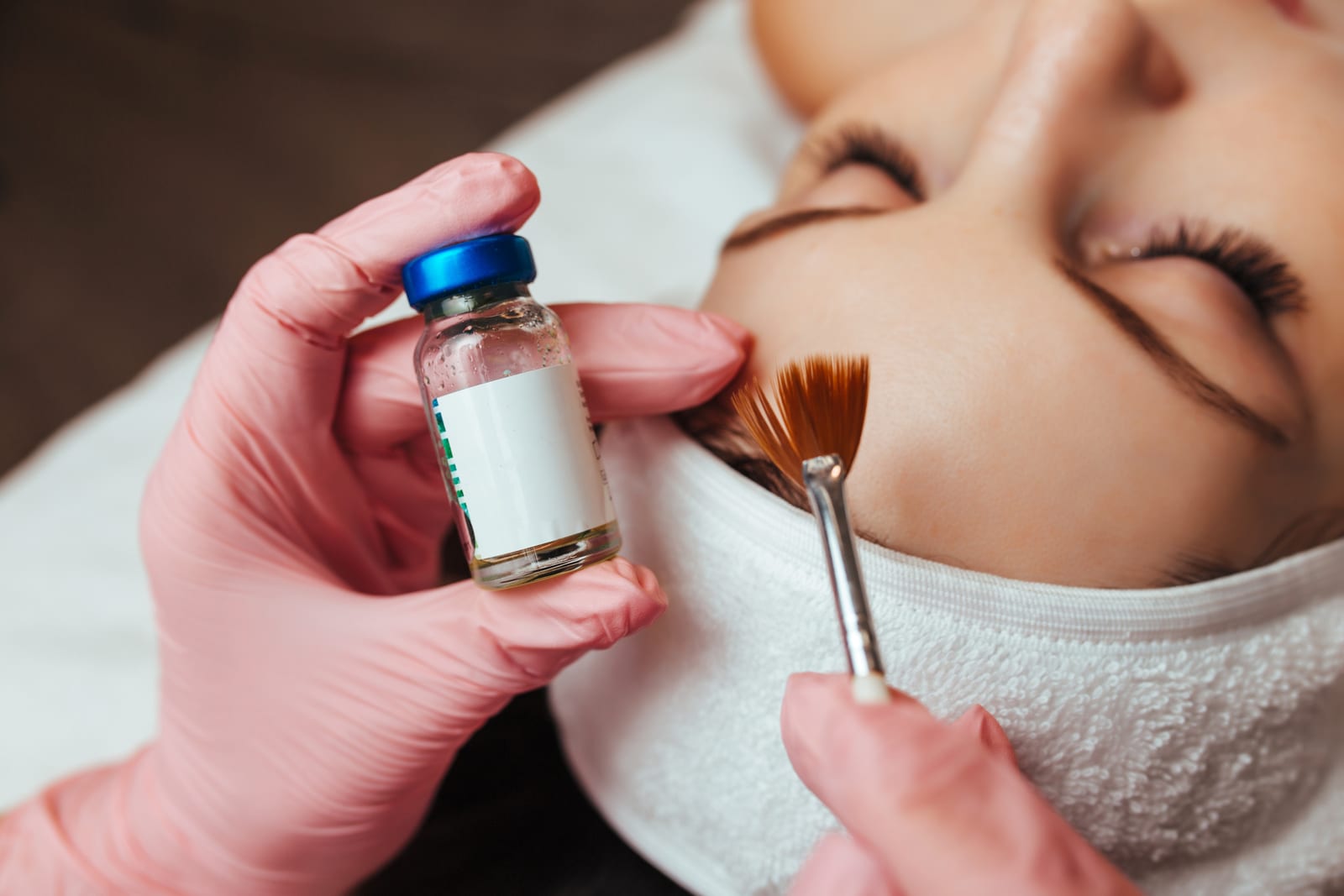
Chemical Peels in Bellevue, WA
Glycolic, salicylic, and TCA peel protocols titrated to skin type and concern.
- Surgeon-Led
Every protocol reviewed through a fellowship-trained facial plastic surgeon's anatomical lens.
- Full Modality Array
Radiofrequency, ultrasound, IPL, picosecond, pulsed-dye, and a complete injectable menu in-house.
- Hospitality-Led
Founded in 2022 around a comfort-first, homey clinic standard — quiet luxury without corporate distance.
- Bellevue Crossroads
15600 NE 8th St, Suite A-8 — minutes from Mercer Island, Kirkland, and Redmond.
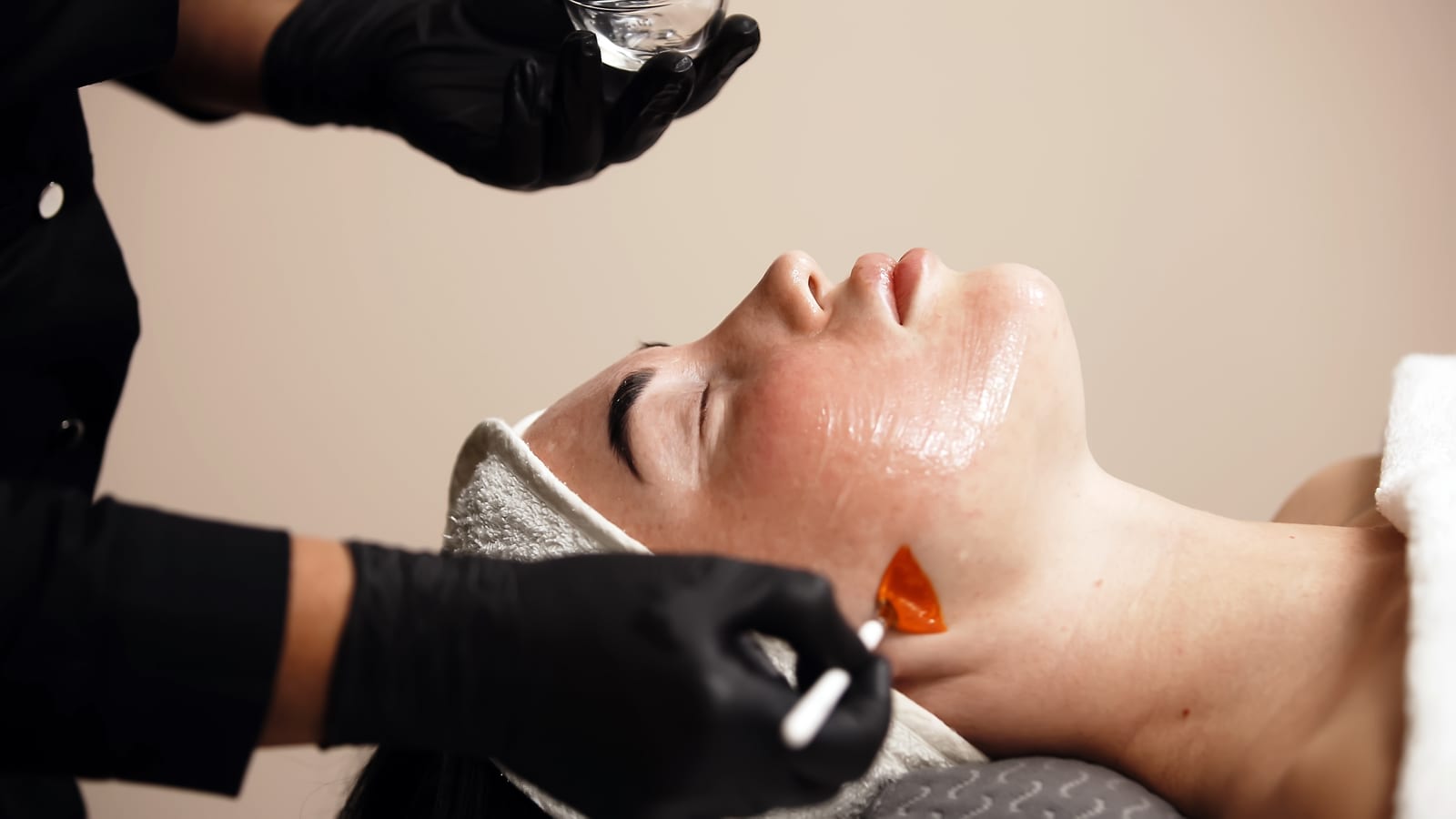
What a Chemical Peel Actually Is
A chemical peel is controlled exfoliation. A medical-grade acid dissolves the bonds between aged, sun-damaged, or pigmented cells in the upper layers, and the skin responds with accelerated cell turnover. New, more uniform skin surfaces over the days and weeks that follow.
Sun Aesthetic Clinic is a surgeon-led medical spa in Bellevue’s Crossroads district. The right chemical peel starts with the right depth, the right acid, and a post-peel pigment-protection layer that holds the result. Every plan is reviewed by a fellowship-trained facial plastic surgeon and titrated to the concern, the skin type, and the downtime you can actually live with.
What a Chemical Peel Actually Is
A chemical peel is controlled exfoliation. A medical-grade acid dissolves the bonds between aged, sun-damaged, or pigmented cells in the upper layers, and the skin responds with accelerated cell turnover. New, more uniform skin surfaces over the days and weeks that follow.
The single most important variable is depth — it determines what the peel can address, how long recovery is, and whether the result is reachable in one session or a series. Light, medium, and deep peels are anatomically distinct interventions reaching distinct layers. The surgeon-reviewed protocol begins with which depth is correct for your concern, and works backward into acid selection and recovery.
The Tier System — Light, Medium, Deep
Light Peels (surface — glycolic, lactic, mandelic, salicylic)
Light peels work at the stratum corneum and upper epidermis — alpha-hydroxy acids (glycolic, lactic, mandelic) or beta-hydroxy salicylic for oilier skin.
- Addresses: dullness, surface texture, early pigment, mild acne and post-acne marks, pore appearance.
- Downtime: minimal — mild pinkness and light flaking over 2 to 5 days; camera-ready same-week.
- Candidate: patients new to peels, reactive skin, darker skin types where depth carries higher pigment risk, and anyone wanting maintenance refinement.
- Cadence: a series — three to six sessions, two to four weeks apart.
Medium Peels (mid-dermal — TCA, layered protocols)
Medium peels reach the papillary dermis. Trichloroacetic acid (TCA) at therapeutic concentrations, or layered protocols (a Jessner pre-pass followed by TCA), are the common tools.
- Addresses: established sun damage, committed pigment irregularity, fine lines around the eyes and mouth, post-inflammatory marks unresponsive to lighter work, texture from older acne.
- Downtime: real, and we will not soft-pedal it. Frosting and tightening in the first 24 hours, then 5 to 7 days of progressive peeling. Pink, photosensitive skin underneath for two to three weeks. A recovery you plan a calendar around.
- Candidate: established concerns a surface peel will not reach, with a clear two-week recovery window. Medium-depth work in darker skin types is possible but requires the pigment-protection protocol below.
- Cadence: most often a single-session reset, sometimes repeated at six to twelve months.
Deep Peels (reticular dermis — phenol/croton oil)
True deep peels — phenol/croton-oil chemistry — reach the reticular dermis. The outcome is significant; the recovery is significant in proportion.
- Addresses: advanced photoaging, deep perioral and periorbital rhytids, scar-pattern resurfacing where laser is not the right answer.
- Downtime: substantial. Open recovery one to two weeks, persistent redness one to three months, photoprotection measured in months.
- Honest positioning: deep peeling is fellowship-level work overlapping with surgical-tier rejuvenation. Candidacy is reviewed in consultation with our fellowship-trained facial plastic surgeon. Many patients who initially ask for a deep peel are better served by a layered medium-peel series, fractional resurfacing, or a surgical conversation — and we will tell you straight.
Treatment Areas and Active Conditions
Face is primary. Chest, neck, and the backs of the hands are also peelable — cumulative sun damage often outruns the face here and responds well to a titrated light or medium protocol.
Concerns peels most often address:
- Sun damage and photoaging — uneven tone, sunspots, dull surface, fine textural lines. See Sun damage, melasma & rosacea.
- Melasma — peels can soften melasma meaningfully, but we will not promise a clearance percentage. Melasma is a chronic, high-recurrence condition driven by hormones, heat, and UV. The honest framing is managed, not cured, and the pigment-protection layer below is non-negotiable.
- Post-inflammatory hyperpigmentation (PIH) and post-acne marks — titrated correctly, peels accelerate clearance. Wrong depth in the wrong skin type can also cause PIH, which is why depth selection is a clinical decision rather than a menu choice. See Acne & scar revision.
- Fine lines and surface texture — most commonly addressed alongside the volume-and-motion side of the face. See Wrinkles & lip volume.
Contraindications. Active cold sores, current isotretinoin within the standard window, pregnancy or breastfeeding for most chemistries, and active infection at the site defer the visit. Fitzpatrick IV–VI skin benefits from peeling, but acid and depth selection shifts — mandelic and lactic at the light tier, and a cautious approach to medium-depth work with an extended pigment-protection runway on either side.
What to Expect Per Tier
- Light — 30 to 45 minutes door-to-door. Mild stinging on application. Pinkness same day, light flaking days 2 to 5, makeup-ready by day 3 to 4.
- Medium — 45 to 75 minutes. More pronounced burning sensation addressed with active cooling and topical comfort measures. Frosting in the first 24 hours, peeling through days 3 to 7, pink and photosensitive skin for two to three weeks. SPF 30+ and physical sun avoidance for at least four weeks.
- Deep — reviewed in consultation rather than booked from the page. Surgical-fellowship review is part of the standard.
Photoprotection is the protocol, not the postscript. Newly turned-over skin is the most UV-vulnerable it will be all year. Daily broad-spectrum SPF and sun avoidance are part of the treatment.
The Surgeon-Reviewed Protocol Layer
Every plan is reviewed by Albert Yang, MD — our fellowship-trained facial plastic surgeon, AAFPRS-trained through Emory and Premier Image. His role is to set the clinical standard for resurfacing: depth, acid, layering, and the post-peel pigment-protection plan that holds the result.
That last layer is where chemical peeling earns or loses its outcome, and it matters most in darker skin types. A correctly chosen peel in Fitzpatrick IV–VI skin without a pigment-protection runway risks the exact problem the patient came in to fix — post-inflammatory hyperpigmentation. The standard protocol layers a topical pigment-suppression regimen on either side of the peel itself: a priming phase before, a protective phase after, with strict photoprotection across both. The same anatomical precision the broader practice applies to surgical planning carries through every depth-and-acid selection.
Dr. Jay Sun, MD — founder and medical director — supports the comfort and patient-experience standard, anchored in his anesthesiology background.
Meet your fellowship-trained provider
Frequently Paired With
- Hydrafacial in Bellevue — the baseline skin-quality protocol the rest of the plan sequences against. Surface-prep and maintenance; peels are the turnover step.
- Microneedling in Bellevue — combination resurfacing when the answer is depth and collagen stimulation rather than turnover alone.
- Botox and dermal fillers — pigment and texture sit on one axis; motion lines and lost volume sit on another. A complete plan often runs both in parallel.
- IPL and laser-based pigment work — for vascular and deep-pigment cross-link, accessed through the Clinical Skin Care category.

The First Step Toward Natural-Looking Results
Every plan begins with an unhurried conversation, a skin-type and concern review, and an honest map of which tier reaches the result you have asked for. No same-day pressure. No upsell to a deeper peel than the concern requires. Refined, surgeon-reviewed resurfacing in a boutique practice in Bellevue Crossroads.
Frequently Asked
Light vs medium vs deep — which do I need?
Depends on the depth of the concern. Surface dullness, mild texture, and early pigment respond to a light series. Established sun damage, committed pigment, and fine lines around the eyes and mouth are usually a medium conversation. Deep peeling is reviewed against surgical-tier alternatives.
Does it hurt? Is there numbing?
Light peels are a warming, tingling sensation. Medium peels are a more pronounced burning sensation during application, addressed with active cooling and topical comfort measures. Topical numbing is available where clinically appropriate.
Is the downtime real?
Yes — especially for medium peels. Plan five to seven days of visible flaking and two to three weeks of pink, photosensitive skin underneath. Patients who plan the calendar around the recovery are uniformly happier with the result.
Pregnant or breastfeeding?
Most peel chemistries defer through pregnancy and breastfeeding. A short list of very superficial actives may be acceptable case-by-case with OB review. The honest default is wait.
Is pricing on the site?
Pricing is shared in the complimentary consultation rather than published on the page. The number depends on tier, acid, and area. A clear written estimate is provided at consultation, with no obligation to proceed the same day.
Series or one-time?
Light peels are a series. Medium peels are most often a single-session reset, sometimes repeated at six to twelve months. Deep peeling is a single intervention with a long recovery.
Related treatments in your category.
Hydrafacial
Multi-step clinical facial — exfoliation, extraction, and serum infusion under one device.
Learn more Clinical Skin CareCandela Glace Facial
Korean-style clinical facial built on diamond-crushed tip technology, cupping lymphatic drainage, and a "glassy" final touch to the skin — same-visit glow with no downtime.
Learn more Clinical Skin CareVampire Facial
Microneedling combined with platelet-rich plasma — refined texture, tone, and luminosity over a treatment series.
Learn more Clinical Skin CareMicroneedling
Collagen induction therapy for texture refinement, scar revision, and pore quality.
Learn more Clinical Skin CareDermaplaning
Manual exfoliation — vellus hair and dead-skin removal for same-visit smoothness and product penetration.
Learn more Clinical Skin CareTargetCool
Cryo-modulated skin therapy for redness, sensitivity, and post-procedure recovery.
Learn morePricing is shared in consultation.
Our pricing is a function of the protocol your anatomy actually needs — not a menu line item. We share specifics during your complimentary consultation, where every cost is contextualized inside the plan it belongs to. Financing options are available for protocols of greater scope.
