
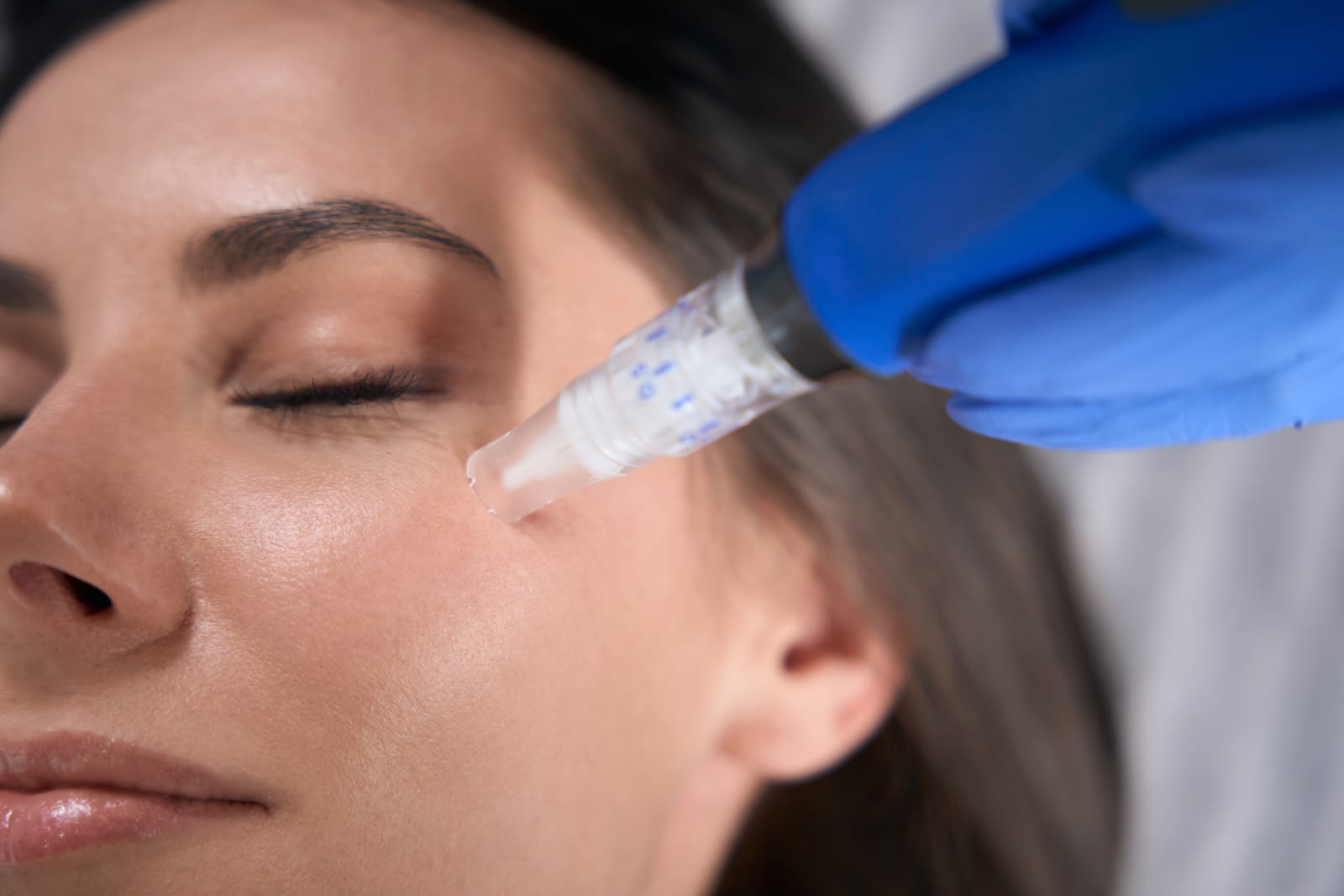
Microneedling in Bellevue, WA
Collagen induction therapy for texture refinement, scar revision, and pore quality.
- Surgeon-Led
Every protocol reviewed through a fellowship-trained facial plastic surgeon's anatomical lens.
- Full Modality Array
Radiofrequency, ultrasound, IPL, picosecond, pulsed-dye, and a complete injectable menu in-house.
- Hospitality-Led
Founded in 2022 around a comfort-first, homey clinic standard — quiet luxury without corporate distance.
- Bellevue Crossroads
15600 NE 8th St, Suite A-8 — minutes from Mercer Island, Kirkland, and Redmond.
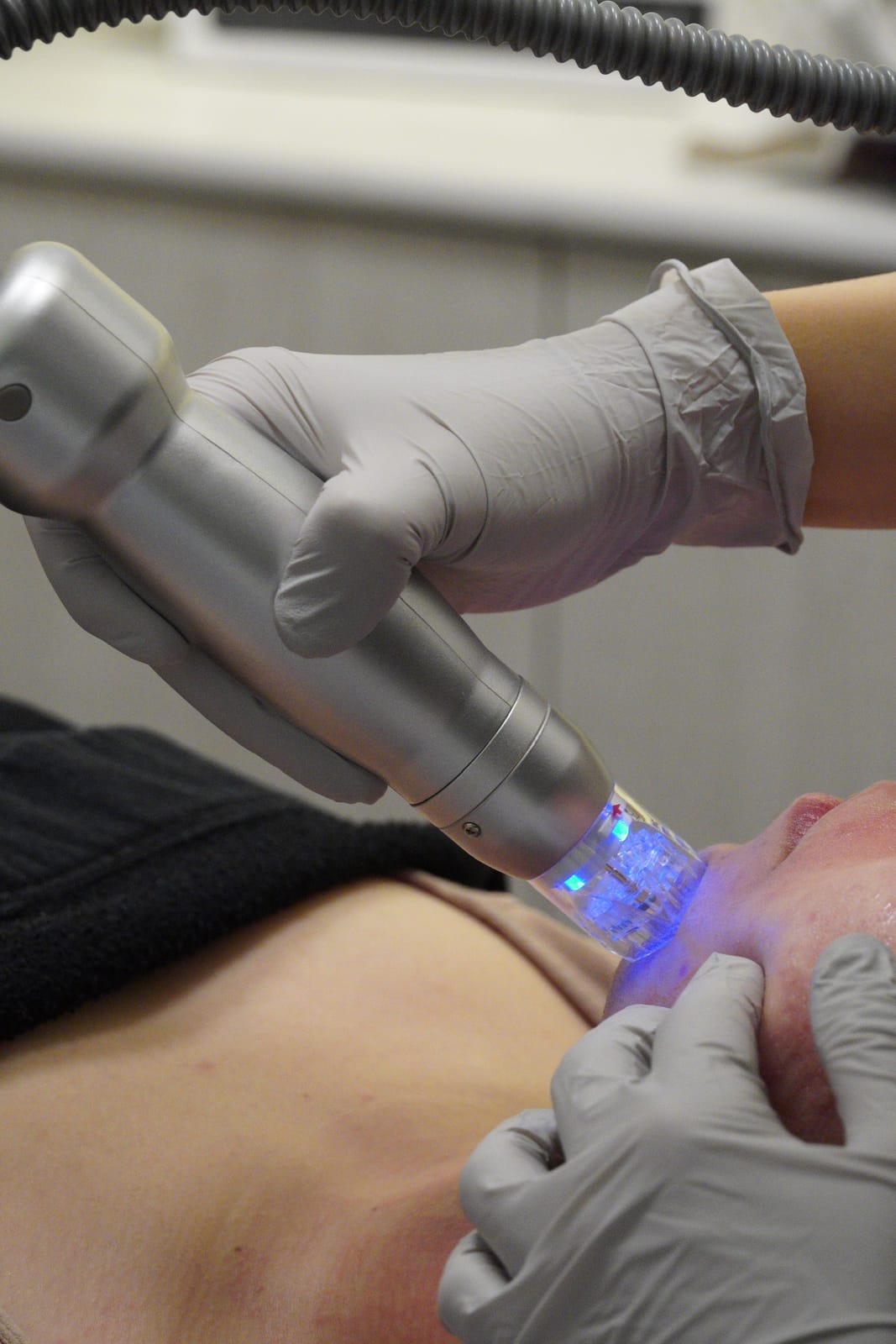
What Microneedling Is
Microneedling — also called collagen induction therapy — is a controlled-injury protocol. A medical device with a precise array of fine, sterile needles passes across the skin and creates thousands of microscopic channels at a depth selected by the provider.
Sun Aesthetic Clinic is a surgeon-led medical spa in Bellevue’s Crossroads district, and microneedling is one of the most foundational protocols on our Clinical Skin Care menu. It is the treatment patients reach for when the conversation is no longer about expression lines or volume, but about the surface itself — the texture, the tone, the small reminders of old breakouts, the early signs that the skin is not turning over the way it used to. Every microneedling plan at the clinic is reviewed by a fellowship-trained facial plastic surgeon, calibrated against your skin type, and run as a series rather than a one-off appointment.
What Microneedling Is
Microneedling — also called collagen induction therapy — is a controlled-injury protocol. A medical device with a precise array of fine, sterile needles passes across the skin and creates thousands of microscopic channels at a depth selected by the provider. Each channel is small enough to close within hours, but collectively they trigger the body’s wound-healing cascade — the same biology that lays down new collagen and elastin during recovery from any controlled injury.
The result is not a surface peel and not a thermal resurfacing. It is a remodeling response from inside the dermis. Over the weeks after each session, the skin builds new collagen scaffolding, the matrix tightens, and the surface refines. The visible payoff is gradual on purpose — this is renewal at the rate the skin can actually rebuild, not a one-day cosmetic event.
The technical part of microneedling is not the device. Modern motorized needling pens are widely available, and the consumable tip is largely standardized. What separates a refined microneedling result from a generic one is the read of the skin that comes before the pass — needle depth selected against the zone, pattern and overlap selected against the indication, pressure modulated against tissue resistance, and a skin-type-specific protocol selected against the patient’s pigmentation profile. That read is the surgeon-led layer.
Treatment Areas and Indications
Microneedling is a single tool with anatomically distinct applications across the upper body. The most common treatment zones at the clinic:
- Full face — the primary indication. Addresses surface texture, fine lines around the eyes and mouth, enlarged-looking pores, and the early decline in skin quality that precedes structural laxity.
- Neck — the zone where skin thins and crepes earliest, and where most other resurfacing protocols are too aggressive. Microneedling is one of the few collagen-stimulating options that is well-tolerated here.
- Décolleté (upper chest) — sun-exposed skin that ages on a parallel timeline to the face but is rarely treated with the same attention. A frequent add-on zone for patients already treating the face.
- Backs of the hands — surface texture and crepiness on the dorsum, a tell-tale aging signal patients often ask about late in a consultation.
The clinical indications microneedling addresses across those zones:
- Acne scarring — particularly rolling and shallow boxcar scars. One of the strongest indications for needling because the controlled injury breaks up the fibrotic tethers under the scar and triggers new collagen to fill the depression. See also Acne & scar revision.
- Surface texture irregularity — the unevenness that does not show up as a discrete line or scar but registers as “tired skin” in photos and under raking light.
- Fine lines — particularly the static fine lines that are dermal rather than dynamic and do not respond fully to neuromodulators alone.
- Early surface laxity — the loss of skin tone that precedes structural descent. Microneedling addresses the quality layer; deeper laxity is a different conversation.
- Post-inflammatory pigment irregularities — including residual marks from old breakouts and the patchy tone left behind by sun exposure. Paired with the work flagged on the Sun damage, melasma & rosacea page when indicated.
What to Expect From a Microneedling Visit
A typical microneedling session at Sun Aesthetic Clinic runs 45 to 75 minutes door-to-door. The bulk of that window is topical numbing, which sits on the skin for roughly 20 to 30 minutes before the pass begins. The needling itself is the shorter portion of the visit.
- Immediate appearance: The skin looks flushed and feels warm — comparable to a moderate sunburn — for the rest of the treatment day.
- Downtime: Visible redness typically resolves between 24 and 72 hours. Most patients are back to normal social and work routine within two to three days. Makeup is generally cleared at 24 hours.
- First visible result: Skin quality refinement is typically visible after the first session as the initial collagen response sets in across the following weeks.
- Series approach: Microneedling is run as a series of three sessions, spaced four to six weeks apart, for the compounding collagen response that gives the protocol its full result.
- Longevity: Results from a completed series typically hold for 6 to 12 months, with annual maintenance sessions recommended to sustain the remodeling.
- Aftercare: Gentle cleansing only for the first 24 hours, no actives (retinoids, acids, vitamin C) for several days, strict sun protection through the recovery window. A full written aftercare protocol is sent home from the session.
Discomfort during the pass is described as a light prickling sensation across the numbed skin. The comfort-first patient experience the clinic is known for — anchored in Dr. Jay Sun’s anesthesiology background — extends through microneedling visits just as it does through every other protocol.
Where the Surgeon-Led Review Layer Matters
Microneedling is one of the more technique-dependent protocols on the menu, in ways that are not always visible from the consumer side. Four variables move the result, and all four are decided before the device is switched on:
- Needle depth — selected against the zone (thinner under-eye and neck tissue takes a different depth than mid-cheek), the indication (acne scarring wants deeper engagement than surface texture refinement), and the patient’s skin thickness.
- Pattern and overlap — how the passes are stacked across the treatment field, and how the overlap is managed at zone borders. Under-treatment leaves visible boundaries; over-treatment risks tracking and uneven response.
- Pressure and pass count — the modulation of device pressure against tissue resistance, and the number of passes layered over the same field. This is the variable that most often separates a refined result from an uneven one.
- Skin-type-specific protocol — particularly for darker skin types, where the collagen-induction response is excellent but the post-inflammatory hyperpigmentation risk is real if the protocol is run as a one-size-fits-all pass. The surgeon-led standard at the clinic uses a more conservative depth-and-density map for Fitzpatrick IV–VI skin, with priming and post-care designed around PIH prevention.
The promise the clinic makes on the parent branch — surgical-grade anatomical precision on every aesthetic decision — runs directly through that review layer for microneedling. Every microneedling plan on the MedSpa branch is reviewed by Albert Yang, MD, our fellowship-trained facial plastic surgeon, with founder Dr. Jay Sun, MD anchoring the comfort and protocol standard.
Meet your fellowship-trained provider
The Microneedling Family — Pure vs +PRP vs +RF
Microneedling is the foundation of a small family of protocols. Each one starts with the same controlled-injury mechanism, then adds a second modality to amplify or redirect the response. The decision among them is a consultation conversation, but the short logic:
- Pure microneedling — this page. Best for surface texture, fine lines, mild-to-moderate acne scarring, early surface laxity, and tone irregularity. The starting point for most patients and a strong stand-alone protocol.
- Vampire Facial in Bellevue (microneedling + PRP) — microneedling combined with PRP (platelet-rich plasma). The pass creates the channels; the patient’s own concentrated growth factors are applied into them. Best for patients who want amplified skin renewal, faster surface recovery, and a stronger response on acne scarring or photoaged skin in a single visit.
- Agnes RF microneedling in Bellevue — microneedling combined with radiofrequency energy delivered through insulated needles, sitting on the Advanced Skin Rejuvenation category. Best when the conversation has moved past surface quality into tightening and selective sub-dermal remodeling — early jawline laxity, deeper acne scarring, and indications where thermal collagen contraction is part of the answer.
- Scarlet RF — also a microneedling-plus-radiofrequency protocol, sitting on the Advanced Skin Rejuvenation category alongside Agnes RF. Differentiated by the device platform and the depth and energy profile it delivers; the consultation matches the right RF-needling platform to the indication.
The general decision logic: start with pure microneedling for surface and quality work, add PRP when the patient wants amplified renewal in the same visit, step to RF-needling when the indication moves into laxity and deeper remodeling. None of these protocols is a replacement for the others — they are sequenced answers to different layers of the same skin.
Frequently Paired With
Microneedling sits inside a broader Clinical Skin Care category sequence. The protocols it most commonly pairs with at Sun Aesthetic Clinic:
- Hydrafacial — the baseline cleanse-extract-hydrate protocol that prepares the skin between needling sessions and maintains the surface in the off-months of a series.
- PRP — used here for scalp and hair-line indications rather than as a same-visit add (for the same-visit add, see the Vampire Facial cross-link above). The standalone PRP page covers the platelet-rich plasma protocol on its own terms.
- Chemical Peels in Bellevue — a complementary resurfacing approach run on its own cadence between microneedling sessions, particularly for patients whose primary concern is tone and pigmentation rather than texture.
- Botox — pairs cleanly because microneedling addresses static and textural lines, while Botox quiets the dynamic muscle activity that re-etches new lines into the recovering surface.
- Dermaplaning — frequently scheduled as a maintenance treatment between microneedling sessions to manage surface debris and vellus hair without disturbing the collagen-rebuilding window.

The First Step Toward Natural-Looking Results
Every microneedling plan at Sun Aesthetic Clinic begins with an unhurried conversation, a surgeon-reviewed read of your skin under clinical light, and a series-and-cadence map scaled to the indication you have come in for. No generic depth-and-density grid. No same-day-pressure decisions. Just refined, surgeon-led collagen induction therapy in a single-location boutique practice in Bellevue Crossroads.
Frequently Asked
Does microneedling hurt?
The pass is preceded by 20 to 30 minutes of topical numbing, and most patients describe the sensation under that numbing as a light prickling across the treatment field rather than pain. The neck, upper lip, and forehead can feel slightly more sensitive than the cheeks. Comfort is dialed into the protocol from the first session.
What is the recovery window?
Visible redness typically resolves between 24 and 72 hours. Day one looks like a moderate sunburn; day two is usually a soft pink that is concealable with mineral makeup once the 24-hour window has cleared; day three is back to baseline for most patients. Sun protection is non-negotiable through the recovery week.
How many sessions will I need?
The standard protocol is a series of three sessions, spaced four to six weeks apart, followed by annual maintenance. Some indications — denser acne scarring, more advanced surface change — may benefit from a four- to six-session series. The series count is set at consultation against the indication and reviewed as the response unfolds.
Microneedling alone, Vampire Facial, or Agnes RF — how do I choose?
Surface texture, fine lines, mild acne scarring, and overall quality work — pure microneedling is the right starting point. Amplified renewal in the same visit, denser scar response, or accelerated surface recovery — Vampire Facial, which adds PRP into the microneedling channels. Tightening, deeper laxity, or indications where thermal sub-dermal remodeling matters — Agnes RF or Scarlet RF on the Advanced Skin Rejuvenation category. The consultation matches the protocol to the indication rather than the other way around.
Are there conditions where I should not have microneedling?
Yes. Active acne flares, active cold sores or herpetic lesions in the treatment field, active eczema or psoriasis in the field, current isotretinoin therapy or a recent course, and pregnancy or breastfeeding are standard exclusion or deferral indications. A history of keloid scarring is reviewed individually. All of this is screened at consultation before a series is scheduled.
Is pricing on the site?
Pricing is shared in the consultation rather than published on the page. Microneedling is run as a series, and series pricing depends on the indication, the session count, and any pairing decisions made at consultation. A clear written estimate is provided at the end of the visit, with no obligation to proceed the same day.
Related treatments in your category.
Hydrafacial
Multi-step clinical facial — exfoliation, extraction, and serum infusion under one device.
Learn more Clinical Skin CareCandela Glace Facial
Korean-style clinical facial built on diamond-crushed tip technology, cupping lymphatic drainage, and a "glassy" final touch to the skin — same-visit glow with no downtime.
Learn more Clinical Skin CareVampire Facial
Microneedling combined with platelet-rich plasma — refined texture, tone, and luminosity over a treatment series.
Learn more Clinical Skin CareChemical Peels
Glycolic, salicylic, and TCA peel protocols titrated to skin type and concern.
Learn more Clinical Skin CareDermaplaning
Manual exfoliation — vellus hair and dead-skin removal for same-visit smoothness and product penetration.
Learn more Clinical Skin CareTargetCool
Cryo-modulated skin therapy for redness, sensitivity, and post-procedure recovery.
Learn morePricing is shared in consultation.
Our pricing is a function of the protocol your anatomy actually needs — not a menu line item. We share specifics during your complimentary consultation, where every cost is contextualized inside the plan it belongs to. Financing options are available for protocols of greater scope.
