
Nordlys IPL in Bellevue, WA
Intense pulsed light for pigment, vascularity, and rosacea — calibrated to skin type.
- Surgeon-Led
Every protocol reviewed through a fellowship-trained facial plastic surgeon's anatomical lens.
- Full Modality Array
Radiofrequency, ultrasound, IPL, picosecond, pulsed-dye, and a complete injectable menu in-house.
- Hospitality-Led
Founded in 2022 around a comfort-first, homey clinic standard — quiet luxury without corporate distance.
- Bellevue Crossroads
15600 NE 8th St, Suite A-8 — minutes from Mercer Island, Kirkland, and Redmond.
What Nordlys IPL Actually Is
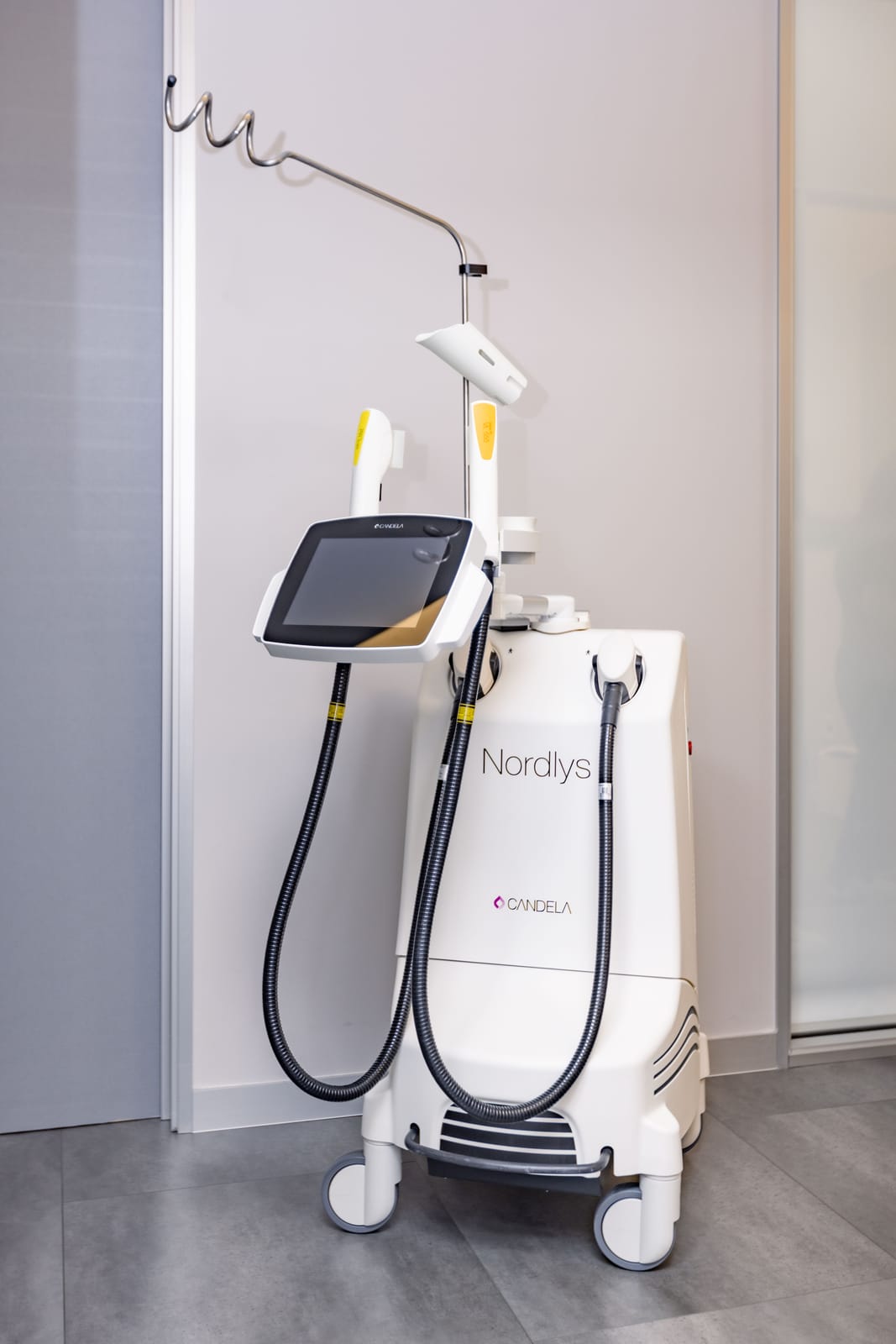
Nordlys is the Candela/Ellipse platform, and its IPL handpiece delivers what the manufacturer calls Selective Waveband Technology (SWT) — a refined form of broadband light with narrow-banded, filtered wavelengths the provider selects per concern.
Sun Aesthetic Clinic is a surgeon-led medical spa in Bellevue’s Crossroads district, and Nordlys IPL is the protocol on our menu most often misunderstood by patients who walked into a generic photofacial somewhere else and came out underwhelmed — or worse, hyperpigmented. Nordlys IPL, used well, is one of the most efficient tools in aesthetic medicine for diffuse sun damage and superficial vascular redness on the face and décolletage. Used without a real skin-type read, it is one of the easier protocols on the menu to get wrong. The difference is parameter selection — and at this clinic, that selection is a surgeon-led read.
What Nordlys IPL Actually Is
Nordlys is the Candela/Ellipse platform, and its IPL handpiece delivers what the manufacturer calls Selective Waveband Technology (SWT) — a refined form of broadband light with narrow-banded, filtered wavelengths the provider selects per concern. Where a generic IPL flashlamp emits a wide, unfiltered spectrum and asks the skin to sort it out, the Nordlys filter system lets the provider pre-shape the light so that the energy delivered into the skin is the wavelength band that will be preferentially absorbed by the target — and not the band that will be wasted on, or worse, absorbed by, the surrounding tissue.
The targets are two:
- Diffuse pigment — melanin in sun spots, age spots, freckles, and post-inflammatory hyperpigmentation. The selected wavelength is absorbed by the pigment in the lesion, the pigment heats and fragments, and the lesion darkens before flaking off over the days that follow.
- Vascular structures — hemoglobin in broken capillaries, telangiectasias, and the diffuse background redness component of mild rosacea. The selected wavelength is absorbed by the hemoglobin in the vessel, the vessel wall is thermally injured, and the vessel clears or fades over the days-to-weeks that follow.
Nordlys platforms are also commonly configured with a Nd:YAG handpiece for deeper vascular work — leg veins, larger facial vessels, and certain hair-removal applications on darker skin types. At Sun Aesthetic Clinic, the Nd:YAG capability is part of the broader vascular toolset, and laser hair removal is handled on its dedicated platform — see the dedicated Laser Hair Removal in Bellevue SERVICE page for hair-reduction work specifically.
The clinical-grade IPL conversation isn’t about the device. It’s about which filter, at what fluence, with what pulse profile, on which patient.
Treatment Indications — What Nordlys IPL Addresses Well
The Nordlys IPL session at this clinic is most often deployed for the following:
- Diffuse sun damage on the face, neck, chest, and hands — the overall mottled photo-aging pattern of small, scattered brown spots, lentigines, and uneven background tone that accumulates over years of sun exposure. This is the highest-yield Nordlys IPL indication and the most common reason patients walk in.
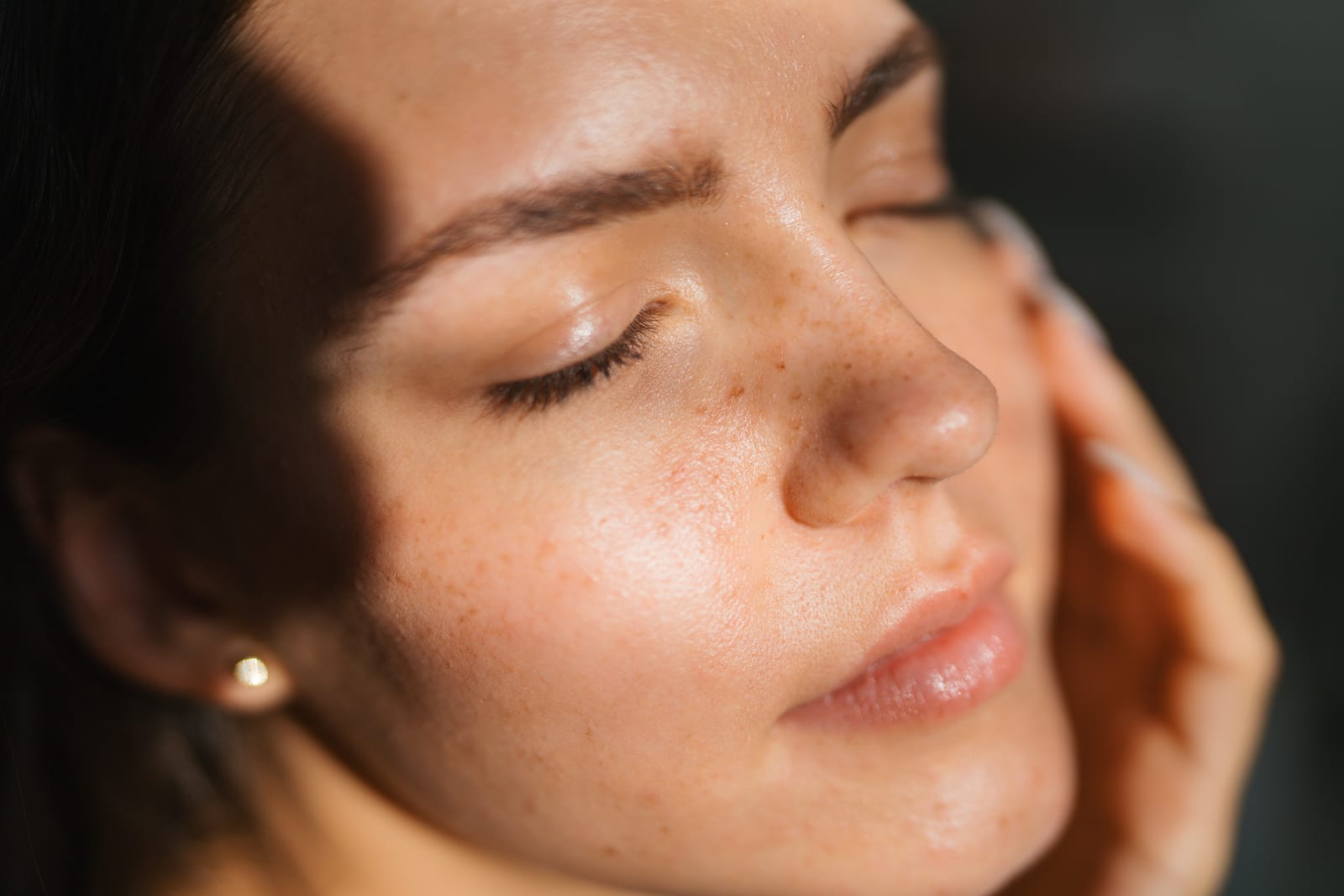
- Freckles and ephelides — particularly on the upper cheeks and nose. Patients should be clear-eyed that freckling is partly genetic and partly sun-driven; the IPL series clears the sun-driven layer and the maintenance conversation manages the rest.
- Post-inflammatory hyperpigmentation (PIH) — superficial, surface-pigment PIH from acne or minor trauma. Deeper dermal pigment is not an IPL indication and is routed to other protocols at consultation.
- Broken capillaries and telangiectasias — fine red vessels around the nostrils, cheeks, and chin.
- The diffuse redness component of mild rosacea — the background flush, not the papulopustular component. More on this in the FAQ.
- Overall photo-aging texture and tone — the refined glow-and-tone result that comes from clearing diffuse pigment and vascular noise simultaneously over a series.
Indications that are not the best fit for IPL, and which we will route honestly at consultation:
- Deep dermal pigment — including most true melasma, which can flare with light-based heat. Routed to topical and chemical-peel protocols.
- Stubborn isolated pigment that has resisted prior IPL — often better served by PicoWay Laser in Bellevue for its picosecond-domain pigment fragmentation.
- Deeper or larger vascular lesions — better served by Vbeam Pro Laser in Bellevue, the pulsed-dye platform with deeper vascular reach.
Laser Skin Resurfacing on the Same Platform — Candela Frax Pro®
The Nordlys platform carries more than the IPL applicator. Candela Frax Pro® utilizes non-ablative fractional laser at 1550 nm and 1940 nm on the Nordlys platform to improve skin texture, skin quality, fine lines, and pores — a laser facial / laser skin resurfacing protocol delivered on the same system, in the same room.
The two wavelengths divide the work: 1940 nm addresses the superficial layer — surface texture, tone, and early photodamage — while 1550 nm reaches deeper into the dermis for fine lines, acne-scar texture, and pore refinement. Because the treatment is fractional and non-ablative, the recovery window is measured in days of mild redness rather than weeks of peeling. For patients whose concern is texture and quality rather than pigment and redness, the Frax Pro conversation frequently runs alongside — or instead of — the IPL series, and the consultation maps which applicator (or sequence of both) your skin is asking for.
Skin-Type Considerations — Honest Framing for Fitzpatrick IV–VI
This is the section we ask Fitz IV–VI patients to read carefully, because the commodity IPL market is not honest about it.
IPL is, by mechanism, a broad-spectrum light energy preferentially absorbed by melanin. That is also exactly why IPL is not a first-line protocol for Fitzpatrick IV, V, and VI skin. Higher baseline melanin in the epidermis means that the same energy meant for the pigment in the target lesion is partially absorbed by the pigment in the surrounding skin — and the clinical consequence on darker skin types is post-inflammatory hyperpigmentation, hypopigmentation, or in the worst commodity scenarios, burns.
There is no parameter combination on a standard IPL handpiece that fully eliminates this risk on Fitz V or VI skin. The honest clinical position — and the one held at Sun Aesthetic Clinic — is that IPL is not the first-line protocol for darker skin types, and we will say so directly.
If you are Fitzpatrick IV–VI and have pigment or vascular concerns, the consultation conversation routes you to:
- PicoWay Laser in Bellevue for pigment work, where the picosecond pulse profile is far safer across the Fitzpatrick range.
- The Nd:YAG modality (where carried on the Nordlys platform) for certain deeper vascular concerns on darker skin types, with parameters selected accordingly.
- Topical, chemical-peel, and other surface protocols routed through the Sun damage, melasma & rosacea concern landing for non-light-based options.
We will not run an IPL session on a skin type where the parameter math doesn’t hold. That is a clinical priority, not a marketing flag.
What to Expect — How the Session and the Series Actually Work
A typical Nordlys IPL session at the clinic runs 30 to 60 minutes, depending on the surface area being treated and whether vascular and pigment passes are layered on the same visit. Eye shields are placed, a thin layer of conducting gel is applied, and the handpiece is pulsed across the treatment area in overlapping passes calibrated to the filter and fluence the provider has selected for the concern.
The in-session sensation is most often described as a quick pinpoint warmth — patients often compare it to a rubber-band flick — with the cooling integrated into the handpiece taking the edge off. Topical anesthesia is generally not required.
Immediately after the session, the treated skin is mildly flushed and may feel sun-exposed for a few hours. Then the visible recovery pattern depends on the target:
- Pigmented lesions — sun spots and freckles typically darken within hours of the session and then flake off over the following 5 to 10 days. This is the desired clinical response; it is not a complication. Patients sometimes call it “coffee-grounding” and it is part of how IPL clears surface pigment.
- Vascular concerns — broken capillaries and diffuse redness typically clear and fade over days to weeks following each session. Some vessels clear on the first pass; others require a second or third session.
A typical Nordlys IPL course is 3 to 5 sessions spaced 4 to 6 weeks apart, with the back half of the series consolidating the result. For sun-prone skin in the Pacific Northwest summer-and-Cascades climate, an annual maintenance session is a normal part of the long-term protocol.
For the 48 hours after a session, patients are asked to avoid hot showers, intense exercise, and direct sun exposure. SPF daily across the series — and ideally year-round — is non-negotiable.
Surgeon-Led Protocol Selection — Why the Filter Read Matters
Nordlys IPL is one of the easier protocols on the menu to run on a preset. It is also one of the easier protocols on the menu to get wrong on a preset. Filter selection, fluence, pulse profile, and integrated cooling are matched per-patient against the concern in front of us and the skin type carrying it — not against a body-area chart.
Every IPL plan at Sun Aesthetic Clinic is reviewed by Albert Yang, MD — our fellowship-trained facial plastic surgeon — and Dr. Jay Sun, MD, the clinic’s founder and medical director. Dr. Yang trained through AAFPRS-recognized fellowships at Emory and Premier Image, with prior head-and-neck reconstructive surgery training, and his role on the branch is to set the parameter standard for every energy-based protocol on the menu. Dr. Sun’s anesthesiology background anchors the in-session comfort standard the clinic is known for.
The clinic refuses one-size IPL protocols. Filter, fluence, pulse, and cooling are selected with anatomical precision per patient — and reviewed against your skin type before any pulse is delivered.
Meet your fellowship-trained provider
Nordlys IPL vs Siblings — How to Self-Route
Three platforms in the energy-based menu overlap on adjacent concerns. Quick orientation:
- Nordlys IPL — best fit for diffuse pigment (multiple small sun spots and freckles across a region) and superficial vascular redness (mild rosacea background, fine telangiectasias). Series-based, refined photo-aging result across the whole treatment area.
- PicoWay Laser in Bellevue — best fit for isolated, stubborn pigment that hasn’t responded to IPL, for tattoo pigment, and for skin revitalization at the picosecond domain. Safer across the full Fitzpatrick range than IPL, including Fitz IV–VI.
- Vbeam Pro Laser in Bellevue — best fit for deeper vascular work, larger facial vessels, and the higher-acuity rosacea cases that IPL only partly addresses.
- Chemical Peels — best fit for surface-level pigment work paired with texture refinement, often layered alongside IPL series for the diffuse photo-aging audience.
The self-route question at consultation is rarely “which platform” — it is “what mix, in what order.” The surgeon-led plan often layers two of these across a yearlong protocol rather than choosing one.
Frequently Paired With
Nordlys IPL sits inside a broader skin-quality conversation at the clinic. The protocols it most commonly pairs with:
- Hydrafacial in Bellevue — the baseline skin-prep protocol most IPL patients run alongside the series.
- Chemical Peels in Bellevue — surface pigment and texture layering for the photo-aging audience.
- Sun damage, melasma & rosacea — the broader concern landing covering the cross-protocol context for the pigment-and-redness audience.
- Veins & vascular concerns — the broader concern landing for vascular-routing work.
The category hub for everything in this surface is the Advanced Skin Rejuvenation category.

The First Step Toward Natural-Looking Results
Every Nordlys IPL plan at Sun Aesthetic Clinic begins with an unhurried conversation, a skin-type read, and a filter-and-fluence map scaled to the concern and the result you have asked for. No preset photofacials. No one-size IPL. Just refined, surgeon-reviewed broadband light work in a single-location boutique practice in Bellevue Crossroads.
Frequently Asked
Will the pigment look worse before it clears?
Yes — and that is the desired clinical response, not a complication. Sun spots and freckles typically darken within hours of the session and then flake off over the following 5 to 10 days. Patients sometimes call this "coffee-grounding." It signals the IPL did its job on the pigment in the lesion. We brief every patient on this pattern before the first session so it isn't a surprise.
Is Nordlys IPL safe for Fitzpatrick IV, V, and VI skin?
We will be direct here. IPL is broad-spectrum light absorbed by melanin, which means higher baseline epidermal melanin in darker skin types raises the risk of post-inflammatory hyperpigmentation and burns. IPL is not the first-line protocol for Fitz IV–VI skin at this clinic. For darker skin types with pigment or vascular concerns, we route to PicoWay Laser in Bellevue for pigment work, to Nd:YAG-based protocols where appropriate, or to topical and chemical-peel protocols routed through the Sun damage, melasma & rosacea concern landing. We will not run an IPL session on a skin type where the parameters can't hold safety.
Do I need to avoid sun exposure before and after?
Yes. Sun-exposed or recently tanned skin (including spray tans and self-tanner residue) shifts your effective skin type upward for the day of treatment and reduces the safety margin on filter and fluence selection. We ask patients to avoid direct sun and tanning for at least two weeks before and after each session, and to use SPF daily across the series — and ideally year-round.
Nordlys IPL vs PicoWay vs Vbeam Pro — which is right for me?
Short version: IPL for diffuse pigment + superficial vascular noise across a whole region. PicoWay for stubborn, isolated pigment, tattoo work, and skin revitalization at picosecond depth — and the safer choice across the full Fitzpatrick range. Vbeam Pro for deeper vascular work and higher-acuity rosacea. The right answer for any individual patient is often a layered mix across a yearlong protocol, mapped at consultation.
How many sessions will I need?
Most patients run a 3 to 5 session series spaced 4 to 6 weeks apart, with the back half of the series consolidating the result. For sun-prone skin, an annual maintenance session is a normal part of the long-term plan. The exact count depends on the depth and density of the pigment, the vascular component, and your skin type — mapped at consultation.
Will IPL cure my rosacea?
No. IPL is not a curative protocol for rosacea, and we will not frame it as one. What IPL does well on the rosacea audience is reduce the diffuse background redness component — the flush — across a series. It does not address the papulopustular component (the bumps), which is a medical-management conversation. The higher-acuity rosacea audience is often better served by Vbeam Pro Laser in Bellevue or by a layered protocol mapped at consultation.
Can I have IPL during pregnancy or breastfeeding?
We defer IPL during pregnancy out of an abundance of caution, even though no direct fetal-risk mechanism has been established in the literature. Breastfeeding patients are reviewed on a case-by-case basis at consultation.
Is pricing on the site?
Pricing is shared in the complimentary consultation rather than published on the page. IPL is concern-driven, area-driven, and session-count-driven — the right number depends on the depth of the photo-aging, the vascular component, and the maintenance cadence we map together. A clear written estimate is provided at consultation, and there is no obligation to proceed the same day.
Related treatments in your category.
Ultherapy
Micro-focused ultrasound for foundational SMAS-layer lifting — non-surgical brow, jawline, and neck refinement.
Learn more Advanced Skin RejuvenationThermage
Monopolar radiofrequency for non-surgical skin tightening across the face and body.
Learn more Advanced Skin RejuvenationAgnes RF
Microinsulated radiofrequency for targeted submental fat, eye-area laxity, and acne lesions.
Learn more Advanced Skin RejuvenationXERF
Bipolar radiofrequency device for surface skin tightening and texture refinement.
Learn more Advanced Skin RejuvenationScarlet RF
Microneedling-delivered radiofrequency for tightening, scar refinement, and texture.
Learn more Advanced Skin RejuvenationONDA PRO
Targeted Coolwaves® microwave energy for full body contouring, submental fat reduction, and skin tightening.
Learn morePricing is shared in consultation.
Our pricing is a function of the protocol your anatomy actually needs — not a menu line item. We share specifics during your complimentary consultation, where every cost is contextualized inside the plan it belongs to. Financing options are available for protocols of greater scope.
