
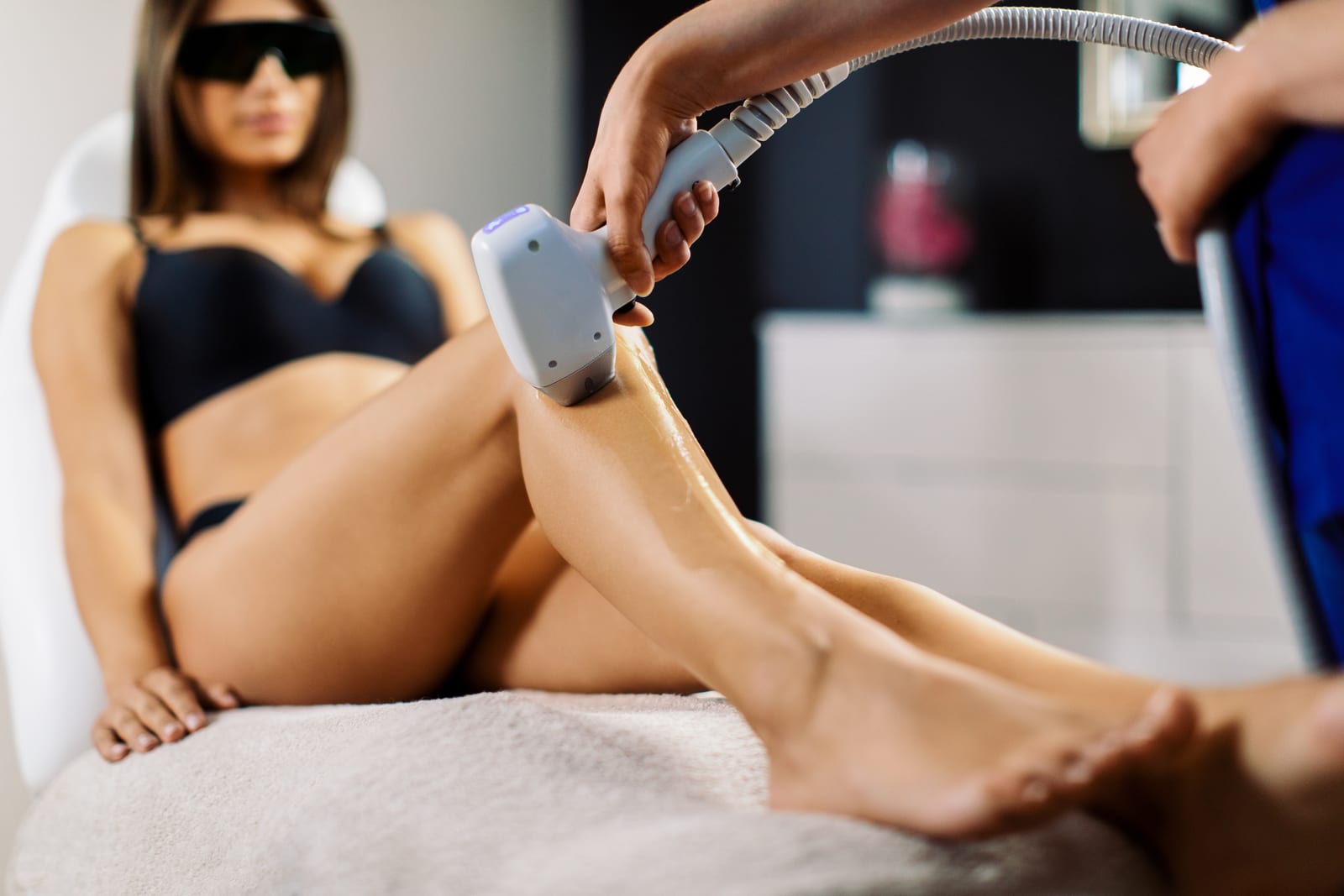
Laser Hair Removal in Bellevue, WA
Long-term hair reduction via diode and Nd:YAG laser, sequenced over a treatment series.
- Surgeon-Led
Every protocol reviewed through a fellowship-trained facial plastic surgeon's anatomical lens.
- Full Modality Array
Radiofrequency, ultrasound, IPL, picosecond, pulsed-dye, and a complete injectable menu in-house.
- Hospitality-Led
Founded in 2022 around a comfort-first, homey clinic standard — quiet luxury without corporate distance.
- Bellevue Crossroads
15600 NE 8th St, Suite A-8 — minutes from Mercer Island, Kirkland, and Redmond.
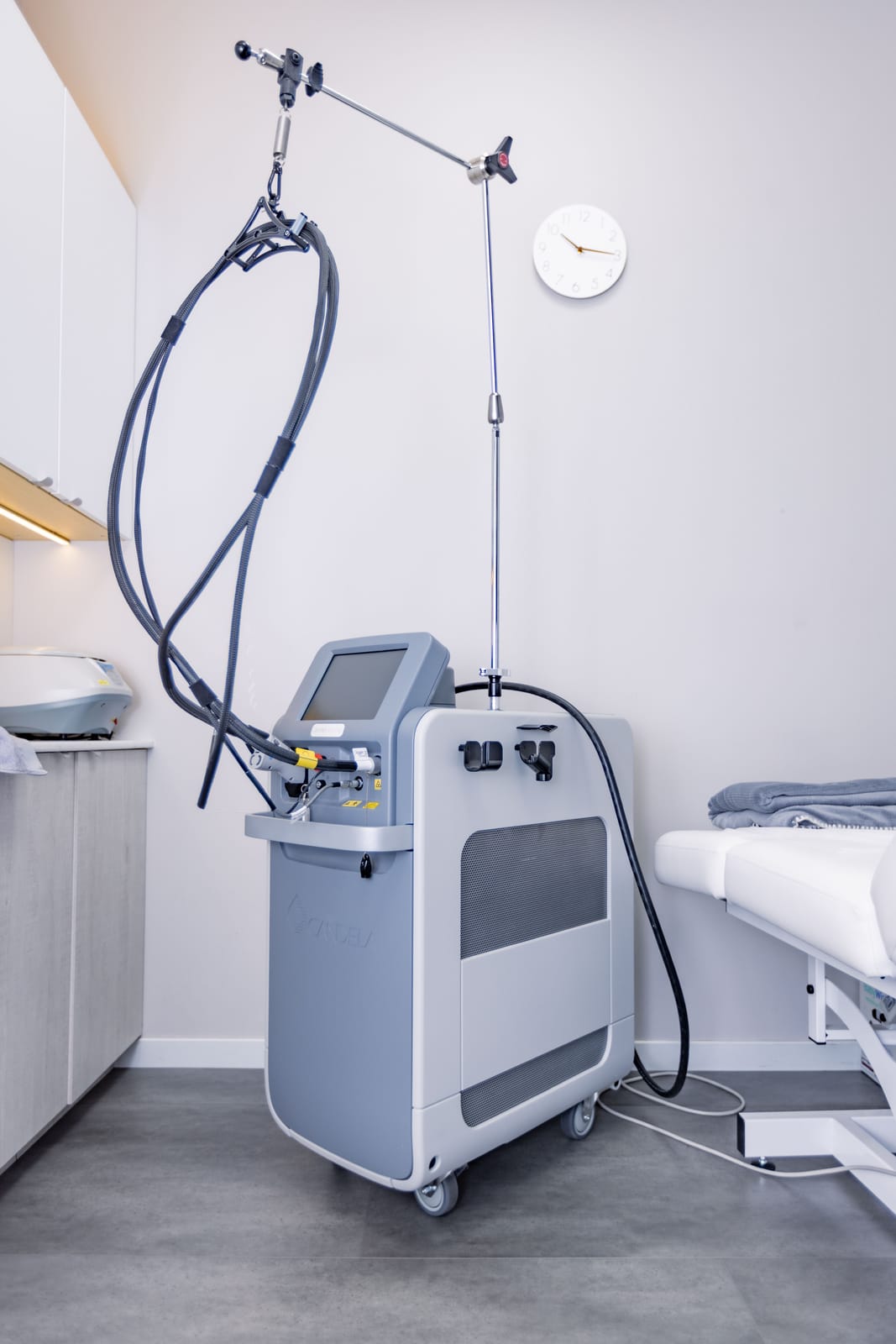
The Candela GentleMax Pro — Our LHR Platform
Laser hair removal at the clinic runs on the Candela GentleMax Pro — widely regarded as one of the best and most established laser hair removal platforms in the industry, and the standard-setting dual-wavelength system for clinical-grade LHR. The GentleMax Pro combines a 755 nm alexandrite laser for lighter skin types with a 1064 nm Nd:YAG laser for darker skin types, with integrated dynamic cooling on every pulse.
Sun Aesthetic Clinic is a surgeon-led medical spa in Bellevue’s Crossroads district, and laser hair removal is one of our highest-volume protocols — and one of the protocols where the difference between clinical-grade work and commodity work is most visible on the skin afterward. Every LHR plan at the clinic is mapped against three variables that most commodity LHR clinics flatten into a single setting — wavelength, pulse duration, and integrated cooling — and then reviewed against your Fitzpatrick skin type, hair density, and the body area being treated.
The Candela GentleMax Pro — Our LHR Platform
Laser hair removal at the clinic runs on the Candela GentleMax Pro — widely regarded as one of the best and most established laser hair removal platforms in the industry, and the standard-setting dual-wavelength system for clinical-grade LHR. The GentleMax Pro combines a 755 nm alexandrite laser for lighter skin types with a 1064 nm Nd:YAG laser for darker skin types, with integrated dynamic cooling on every pulse. That dual-wavelength range is exactly what makes the honest Fitzpatrick-type conversation below possible — the platform can treat safely across the full skin-type spectrum when the parameters are read correctly.
What Clinical-Grade Laser Hair Removal Actually Is
Laser hair removal works on a principle called selective photothermolysis. A pulse of laser light is delivered into the skin at a wavelength preferentially absorbed by melanin in the hair shaft and follicle. The energy converts to heat, the heat damages the follicle’s regenerative cells, and the follicle’s ability to produce hair is reduced — permanently for many follicles, with the remainder cycling back at finer caliber and lighter pigment.
The protocol only works on follicles currently in the active growth phase — anagen. At any given moment, only a fraction of the hair on a given body area is in anagen; the rest are in transitional or resting phases and are biologically invisible to the laser. That is the entire reason LHR is a series rather than a single treatment. Each session catches a different fraction of the follicle population on each pass.
Three technical variables determine whether a given pulse is safe and effective on a given patient:
- Wavelength — different wavelengths penetrate to different depths and are absorbed differently by melanin in the hair versus melanin in the surrounding skin. A platform that lets the provider select between wavelengths is what makes LHR work across the full Fitzpatrick range.
- Pulse duration — the length of time the energy is delivered. Shorter pulses concentrate energy in fine, low-pigment follicles; longer pulses are paired with darker skin types to spread the thermal load and protect the surrounding epidermis.
- Integrated cooling — the surface of the skin must be cooled, before and during the pulse, to keep the epidermis from absorbing thermal energy meant for the follicle. This is the single most under-prioritized variable in commodity LHR settings, and it is the variable most directly tied to safety on darker skin types.
The surgeon-led approach at Sun Aesthetic Clinic selects all three of these against the patient in front of us — not against a preset for the body area on the chart.
Treatment Areas We Address
LHR is one tool with a very broad set of applications across the face and body. The full menu at the clinic:
- Face and neckline — upper lip, chin, jawline, sideburns, full face, anterior neck. Dose calibration here is the most sensitive because facial skin is thin and pigment-rich; the protocol-review layer matters more on the face than anywhere else.
- Underarms — one of the most consistently satisfying LHR areas because the follicle density is high and the treatment window is small.
- Bikini and Brazilian — standard bikini line through full Brazilian, mapped to your preference at consultation.
- Legs — full leg, lower leg, upper leg, or knee-line strip. Large surface-area work; session times scale accordingly.
- Arms — full arm, lower arm, or shoulder-line. A common pairing area for patients treating underarms.
- Back, chest, and shoulders (men) — the largest single-segment audience for body LHR at the clinic. See the Men’s aesthetic treatments hub for the men’s curated services strip.
- Clean beard lines and ingrown hair (pseudofolliculitis barbae) — precise beard-line definition along the cheek and neck, and a first-line answer for the razor bumps and chronic ingrown-hair inflammation of pseudofolliculitis barbae. Reducing the follicle removes the ingrown-hair cycle at its source — one of the most quietly life-improving LHR indications for male patients.
- Abdomen — full abdomen, navel line, or lower-abdomen-only.
- Hands and feet — knuckles, toe-line, and bridge.
Every treatment area is mapped at consultation with the wavelength + pulse-duration + cooling combination that fits both the area and your skin type. There is no scenario at the clinic where a body-area preset is run without that read.
Skin-Type Considerations — Honest Framing for Fitzpatrick IV–VI
This is where the surgeon-led standard matters most, and where we will be direct about a clinical reality the commodity LHR market routinely glosses over.
Darker skin types — Fitzpatrick IV, V, and VI — have higher baseline melanin in the epidermis. The same wavelength that targets melanin in the hair follicle will also be partially absorbed by melanin in the surrounding skin. The wrong wavelength, the wrong pulse duration, or insufficient cooling on a Fitz IV–VI patient does not produce a sub-optimal result. It produces post-inflammatory hyperpigmentation (PIH), burns, or in the worst commodity-LHR scenarios, scarring.
The right protocol, on the same patient, delivers safe and effective hair reduction.
The variables that separate one outcome from the other are not subtle, and they are not negotiable. Longer-wavelength selection paired with longer pulse durations, and aggressive integrated cooling on every pass — that is the standard for darker skin types at Sun Aesthetic Clinic. On sessions where comfort and surface-protection require additional adjunct cooling, our TargetCool protocol integrates directly into the LHR session.
If you are Fitzpatrick IV–VI and have been told by a commodity LHR setting that they “can’t treat your skin type,” or you have been treated previously and ended up with PIH, the consultation conversation at this clinic starts with an honest read of what wavelength and pulse-duration selection your skin actually needs.
This is not a marketing flag. It is a clinical priority.
Protocol Expectations — How the Series Actually Works
A typical LHR course at the clinic is 6 to 8 sessions, with interval spacing that varies by body area:
- Face — sessions spaced approximately 4 weeks apart, matching the shorter follicle cycle of facial hair.
- Underarms, bikini, Brazilian — approximately 4 to 6 weeks apart.
- Legs, arms, abdomen — approximately 6 to 8 weeks apart.
- Back, chest, shoulders — approximately 6 to 8 weeks apart, sometimes longer for sparse-density chest work.
Results compound across the series. Each session captures a different fraction of the follicle population in anagen, so the visible reduction builds session over session rather than peaking after one treatment. Most patients see meaningful reduction by session three or four; the back half of the series is where the result consolidates.
The FDA-approved language for LHR is permanent hair reduction, not permanent removal. The distinction matters. A meaningful fraction of treated follicles are eliminated permanently; others return finer and lighter; and a smaller fraction reactivate over time, particularly in hormonally responsive areas (face, jawline, lower abdomen, bikini line). Annual maintenance — typically one or two sessions per year — is a normal part of long-term LHR for many patients and is mapped against your hormonal profile and follicle behavior at consultation.
We will not promise permanent removal. We will deliver permanent reduction with an honest maintenance conversation at the back end.
Surgeon-Led Oversight — Even on a High-Volume Protocol
LHR is one of the highest-volume aesthetic protocols in the United States, and that volume is exactly why the parameter-selection layer drifts in most commodity settings. A grid of body-area presets is faster to run than a per-patient skin-type read. The result is the LHR market most patients have encountered — uneven results, PIH on darker skin types, and the quiet conclusion that “the laser just didn’t work on me.”
Every LHR plan at Sun Aesthetic Clinic is reviewed by Albert Yang, MD — our fellowship-trained facial plastic surgeon — and Dr. Jay Sun, MD, founder and medical director. Dr. Yang trained through AAFPRS-recognized fellowships at Emory and Premier Image, with prior head-and-neck reconstructive surgery training, and his role on the branch is to set the parameter standard for every energy-based protocol on the menu. Dr. Sun anchors the comfort standard the clinic is known for, drawn from his anesthesiology background.
The clinic refuses one-size LHR protocols. Wavelength, pulse duration, and cooling are selected per patient — and reviewed against your skin type before any pulse is delivered.
Meet your fellowship-trained provider
Frequently Paired With
LHR sits inside a broader skin-quality conversation at the clinic, and the protocols it most commonly pairs with:
- Hydrafacial in Bellevue — the baseline skin protocol most LHR patients run alongside the series, particularly on the face and neckline.
- Dermaplaning in Bellevue — surface-finishing for face and neckline patients between LHR sessions on facial areas.
- TargetCool — integrated cooling adjunct, used both for comfort and as a surface-protection layer on sessions that benefit from additional cooling. Standard on many Fitz IV–VI protocols.
- Men’s aesthetic treatments — the curated services hub for the men’s body-LHR audience (back, chest, shoulders, neckline).
The category hub for everything in this surface is the Advanced Skin Rejuvenation category, and the broader Body contour & hair concern page covers the cross-protocol context.

The First Step Toward Natural-Looking Results
Every LHR plan at Sun Aesthetic Clinic begins with an unhurried conversation, a skin-type read, and a parameter map scaled to the body area and the result you have asked for. No body-area presets. No one-size protocols. Just refined, surgeon-reviewed laser work in a single-location boutique practice in Bellevue Crossroads.
Frequently Asked
Is laser hair removal permanent?
The FDA-approved language is permanent hair reduction, not permanent removal — and we hold to that language. A meaningful fraction of treated follicles are eliminated permanently. Others return finer and lighter. A smaller fraction reactivate over time, particularly in hormonally responsive areas. Annual maintenance is a normal part of long-term LHR for many patients and is mapped at consultation.
How painful is laser hair removal?
Most patients describe the sensation as a quick warm snap at each pulse — comparable to a rubber-band flick. Integrated cooling reduces the surface sensation significantly, and on sessions where comfort warrants it, the TargetCool adjunct is layered into the protocol. The comfort standard at the clinic — anchored in Dr. Jay Sun's anesthesiology background — runs through the LHR room just as it does through every other protocol.
Is laser hair removal safe for Fitzpatrick IV, V, and VI skin?
Yes — with the right wavelength, pulse duration, and cooling selection. This is the protocol-review layer the surgeon-led standard exists for. The wrong selection on a darker skin type can produce post-inflammatory hyperpigmentation or burns; the right selection delivers safe, effective hair reduction. We will be honest about that distinction at consultation and will not run a session on parameters we cannot stand behind.
Can I have laser hair removal during pregnancy or breastfeeding?
We defer LHR during pregnancy out of an abundance of caution, even though no direct fetal-risk mechanism has been established in the literature. Breastfeeding patients can be treated outside the immediate breast-tissue area on a case-by-case basis. Both scenarios are reviewed at consultation.
Do I need to avoid sun exposure or tanning?
Yes. Sun-exposed or recently tanned skin (including spray tans and self-tanner residue) shifts your effective skin type upward for the day of treatment and reduces the safety margin on parameter selection. We ask patients to avoid direct sun and tanning for at least two weeks before and after each session, and to use SPF daily across the LHR series.
How many sessions will I need?
Most areas require 6 to 8 sessions in the initial series, with spacing that varies by body area (roughly 4 weeks for face, 4–6 weeks for underarms and bikini, 6–8 weeks for legs, back, chest, and abdomen). Results compound across the series. Annual maintenance is common for hormonally responsive areas.
Is pricing on the site?
Pricing is shared in the complimentary consultation rather than published on the page. LHR is area-driven, density-driven, and session-count-driven — the right number depends on the body area, the protocol your skin type requires, and the maintenance cadence we map together. A clear written estimate is provided at consultation, and there is no obligation to proceed the same day.
Related treatments in your category.
Ultherapy
Micro-focused ultrasound for foundational SMAS-layer lifting — non-surgical brow, jawline, and neck refinement.
Learn more Advanced Skin RejuvenationThermage
Monopolar radiofrequency for non-surgical skin tightening across the face and body.
Learn more Advanced Skin RejuvenationAgnes RF
Microinsulated radiofrequency for targeted submental fat, eye-area laxity, and acne lesions.
Learn more Advanced Skin RejuvenationXERF
Bipolar radiofrequency device for surface skin tightening and texture refinement.
Learn more Advanced Skin RejuvenationScarlet RF
Microneedling-delivered radiofrequency for tightening, scar refinement, and texture.
Learn more Advanced Skin RejuvenationONDA PRO
Targeted Coolwaves® microwave energy for full body contouring, submental fat reduction, and skin tightening.
Learn morePricing is shared in consultation.
Our pricing is a function of the protocol your anatomy actually needs — not a menu line item. We share specifics during your complimentary consultation, where every cost is contextualized inside the plan it belongs to. Financing options are available for protocols of greater scope.
