

Rejuran in Bellevue, WA
Polynucleotide-based regenerative skin booster for elasticity and barrier repair.
- Surgeon-Led
Every protocol reviewed through a fellowship-trained facial plastic surgeon's anatomical lens.
- Full Modality Array
Radiofrequency, ultrasound, IPL, picosecond, pulsed-dye, and a complete injectable menu in-house.
- Hospitality-Led
Founded in 2022 around a comfort-first, homey clinic standard — quiet luxury without corporate distance.
- Bellevue Crossroads
15600 NE 8th St, Suite A-8 — minutes from Mercer Island, Kirkland, and Redmond.
What Rejuran Is
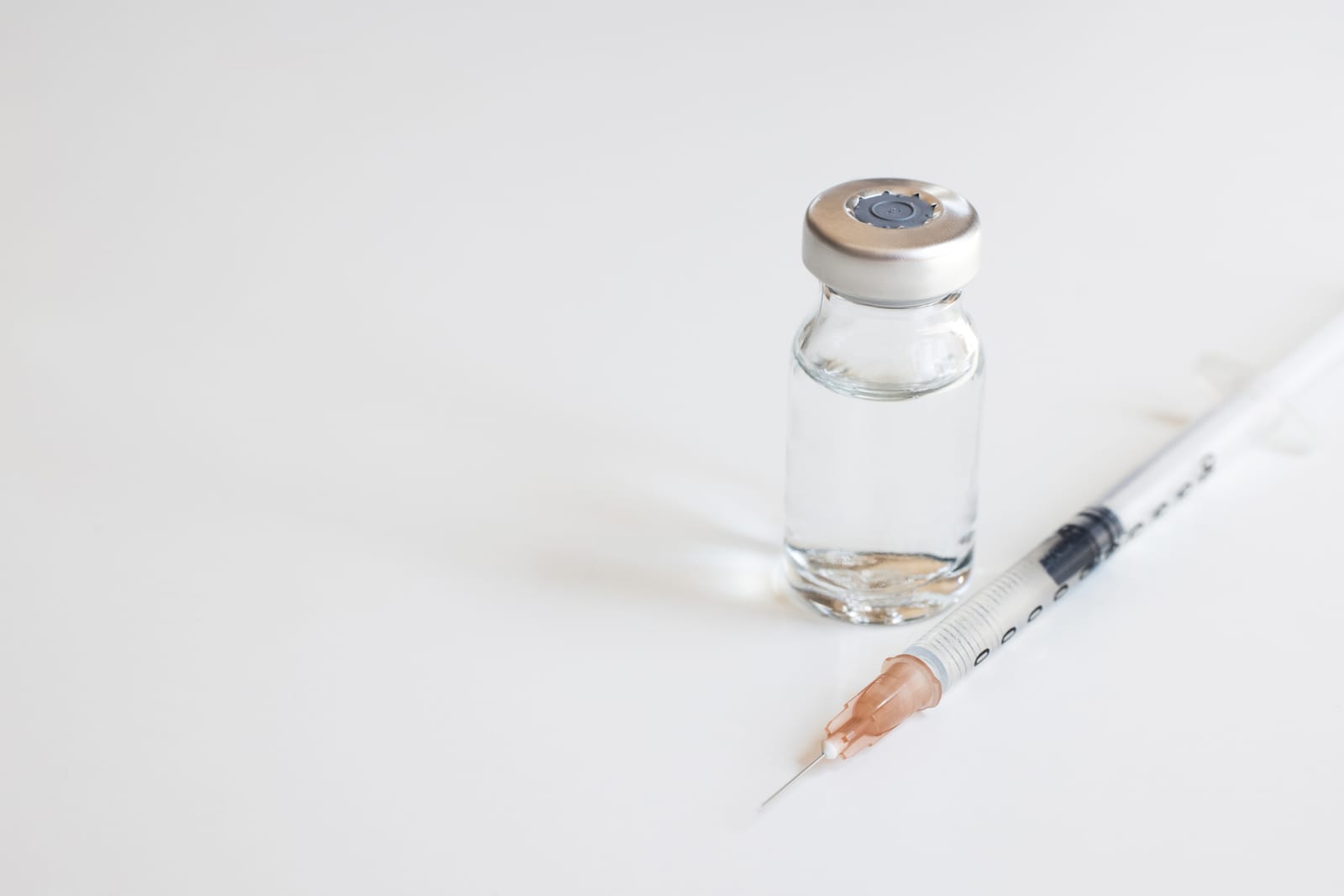
Rejuran is a polynucleotide (PN) injectable — a sterile, purified solution of short DNA fragments derived from salmon-source nucleic acids.
Sun Aesthetic Clinic is a surgeon-led medical spa in Bellevue’s Crossroads district, and Rejuran is the most distinctive entry on our Clinical Skin Care category — a polynucleotide injectable protocol developed inside Korean aesthetic medicine and brought to the Eastside as a refined skin-quality treatment. It is the conversation patients reach for when the goal is not volume and not muscle quieting, but the surface itself: tone, texture, elasticity, fine-line softening, and the regenerative response of the dermis. Every Rejuran plan at the clinic is reviewed by a fellowship-trained facial plastic surgeon, mapped to the patient’s skin type and indication, and run as a structured series rather than a single visit.
What Rejuran Is
Rejuran is a polynucleotide (PN) injectable — a sterile, purified solution of short DNA fragments derived from salmon-source nucleic acids. Polynucleotides are a class of biologically active molecules that interact with the dermis at the cellular level: when placed at shallow depth across a treatment grid, they signal fibroblast activity, support extracellular-matrix turnover, and trigger the skin’s own regenerative cascade. The mechanism is biological rather than mechanical — the product does not sit in the tissue as a structural element, it is metabolized and used as a regenerative signal.
The outcome, across a completed series, is a refinement of skin quality:
- Improved elasticity and resilience.
- Smoother surface texture.
- Softening of superficial fine lines that are dermal rather than dynamic.
- Strengthened barrier function, with a calmer, more even-toned surface.
The visible payoff is gradual on purpose. This is the skin rebuilding from inside its own remodeling cycle, not a one-day cosmetic event.
What Rejuran Is Not
A clear word, because this is the part of the Rejuran conversation that gets blurred most often online: Rejuran is not a filler. It does not add volume. It does not lift, project, or restore lost facial structure. A patient who is looking for restored mid-face volume, defined cheekbones, jawline contouring, or lip projection is looking for a different protocol family — a biostimulator like Sculptra or Radiesse, or a hyaluronic-acid filler, depending on the indication. Those decisions are covered on the Wrinkles & lip volume treatment and Facial aging & sagging concern pages.
Rejuran lives on the other side of that map. It is for patients whose skin still has its scaffolding but is losing quality — surface tone, elasticity, smoothness, barrier integrity, the unquantifiable read of “rested” skin. Matching the patient to the right protocol — quality versus volume versus laxity — is the work of the consultation, and it is the part of the visit the surgeon-led review layer is built around.
Origin and K-Aesthetic Context
Rejuran was developed in South Korea and is widely used across K-aesthetic clinics as part of a category of regenerative skin protocols that have been refined inside that market for more than a decade. Polynucleotide injectables sit alongside exosome therapy, mesotherapy, and growth-factor protocols inside the broader regenerative skin-care vocabulary that came out of Korean aesthetic medicine and is now expanding internationally.
A direct note on US regulatory status, because clinical honesty matters: Rejuran is not currently FDA-approved for aesthetic use in the United States. Use within US clinical settings is evolving and is appropriately framed as off-label or investigational depending on jurisdiction and source. The protocol is offered at Sun Aesthetic Clinic under a surgeon-led clinical-judgment framework, with full disclosure to the patient at consultation and informed consent prior to any session. Patients who want a protocol with a US-marketed regulatory designation should raise that in consultation — the team will route the conversation to the right alternative on the menu.
The regenerative context matters here. Albert Yang, MD, our fellowship-trained facial plastic surgeon, brings an academic grounding in regeneration that predates his surgical training — including a master’s in stem cell biology and human nutrition from Columbia University — and it informs how this category of protocols is selected, sequenced, and reviewed at Sun Aesthetic Clinic. Polynucleotides are not a trend item on this menu — they are placed inside a deliberate regenerative-skin-care framework.
Treatment Areas
Rejuran is a versatile skin-quality protocol with strong indications across the face and adjacent zones:
- Face — periorbital region. Crepiness and fine-line softening around the eyes, where the skin is thin and other resurfacing protocols are often too aggressive.
- Face — perioral region. Surface refinement around the mouth, where vertical lip lines and surface texture loss show up earlier than patients expect.
- Face — mid-face and cheek surface. Overall quality refinement across the cheek surface, not as a volume substitute but as a skin-finish layer.
- Neck. One of the highest-value zones for Rejuran. The neck loses skin quality and elasticity earlier than the face but tolerates fewer aggressive resurfacing options — polynucleotides fit this anatomy well.
- Décolleté (upper chest). Sun-exposed surface that ages on a parallel timeline to the face and responds well to a structured Rejuran series.
For patients carrying concerns across more than one zone, the consultation maps a multi-area protocol — which zones go first, how the series is sequenced across visits, and how Rejuran layers with other regenerative or contouring work already on the plan.
What to Expect
A typical Rejuran plan at Sun Aesthetic Clinic runs as a structured series:
- Series structure: Typically 3 to 4 sessions, spaced 2 to 4 weeks apart, with the exact cadence set against the indication, zone, and patient response. Some plans extend to a longer series for advanced surface change.
- Technique: Injections are placed in a fine grid pattern at shallow dermal depth across the treatment field. The grid spacing, depth, and volume per point are protocol-specific and reviewed against the zone.
- Session length: Most single-zone sessions run 30 to 60 minutes door-to-door, including topical numbing and post-treatment cooling.
- Comfort: A topical anesthetic is applied before the grid is mapped. Sensation during the pass is described as a series of brief pinpricks rather than continuous discomfort. The comfort-first standard anchored in Dr. Jay Sun’s anesthesiology background extends through Rejuran visits as it does through every other protocol.
- Immediate appearance: Small pinpoint papules at each injection point are expected and are part of normal early post-treatment appearance. These typically resolve within a few hours to one to two days, depending on the zone and the patient.
- Downtime: Minimal. Most patients return to normal social and work routine within the same day or the next, with light cover-up if desired during the early window.
- Result timeline: Skin quality refinement emerges gradually over the weeks-to-months that follow the series as the regenerative response unfolds. This is a build, not a reveal.
- Aftercare: Gentle cleansing, no actives (retinoids, acids, vitamin C) for the first 24–48 hours, no aggressive heat exposure (sauna, intense workouts) for the first day, and strict sun protection. A full written aftercare protocol is sent home from the session.
Where the Surgeon-Reviewed Protocol Layer Matters
Rejuran is a protocol-defined treatment more than a product-defined one. The vial is one input — what shapes the result is the clinical framework around it. The variables that move the outcome, and that are decided before the first injection:
- Injection-grid pattern. How the points are spaced across the field, and how the grid is adjusted at zone borders (periorbital into temple, perioral into chin, neck into jawline). Even spacing and good border management are what produce a refined, undetectable result.
- Depth. Shallow dermal placement is the rule, but the exact depth is calibrated against tissue thickness — periorbital and neck tissue takes a different depth than mid-cheek or décolleté.
- Dilution and volume per point. Reconstitution and per-point dosing are protocol-specific and reviewed against the indication and the patient’s skin type.
- Series design. The number of sessions, the spacing between them, the layering with other protocols across a 3–6 month plan, and the maintenance cadence after the initial series — these decisions are where the long view matters more than any single visit.
Every Rejuran plan on the MedSpa branch is reviewed by Albert Yang, MD, our fellowship-trained facial plastic surgeon, with founder Dr. Jay Sun, MD anchoring the comfort and protocol standard. The promise the clinic makes — surgical-grade anatomical precision on every aesthetic decision — runs directly through the Rejuran review layer, the same as it does through structural injectable work.
Meet your fellowship-trained provider
Frequently Paired With
Rejuran rarely sits alone on a plan. It is most often layered into a structured 3 to 6 month regenerative protocol alongside complementary work on the Clinical Skin Care category menu:
- PRP (regenerative pairing) — platelet-rich plasma protocol that operates on a parallel regenerative-signal logic, frequently sequenced with Rejuran across a multi-session plan.
- Exosome Therapy — another regenerative skin-quality protocol on the Korean-aesthetic-derived menu, commonly layered into the same long-arc plan.
- Mesotherapy — micro-dosed dermal delivery protocol that pairs well with Rejuran as a hydration-and-nutrient-support layer between regenerative sessions.
- Hydrafacial — the baseline cleanse-extract-hydrate protocol that maintains the surface between Rejuran sessions and through the months after a completed series.
- Microneedling — collagen induction therapy that complements polynucleotide regeneration when the indication includes denser textural change or acne scarring.
- Sculptra / Radiesse (volume-restoring biostimulators) — discussed at consultation when the read of the face shows both a quality concern (Rejuran) and a volume concern (Sculptra or Radiesse). These are not the same protocol — they are layered, not substituted.

The First Step Toward Natural-Looking Results
Every Rejuran plan at Sun Aesthetic Clinic begins with an unhurried conversation, a surgeon-reviewed read of your skin under clinical light, an honest matching of your indication to the right protocol — quality versus volume versus laxity — and a series-and-cadence map scaled to the goals you have come in for. No generic grid. No same-day-pressure decisions. Just refined, surgeon-led polynucleotide regeneration in a single-location boutique practice in Bellevue Crossroads.
Frequently Asked
Is Rejuran a filler?
No. Rejuran is a polynucleotide skin-quality protocol — it does not add volume, lift, or restore facial structure. Patients looking for volume restoration are matched at consultation to a biostimulator (Sculptra, Radiesse) or a hyaluronic-acid filler, depending on the indication. Rejuran is selected when the goal is skin quality, elasticity, and surface refinement.
Is Rejuran FDA-approved?
Rejuran is widely used across Korean aesthetic medicine and other international markets, but it is not currently FDA-approved for aesthetic use in the United States. Use within US clinical settings is evolving and is offered at Sun Aesthetic Clinic under a surgeon-led clinical-judgment framework, with full disclosure and informed consent at consultation. If a US regulatory designation is a deciding factor for you, that conversation is routed to the appropriate alternative on the menu.
Does it hurt?
A topical anesthetic is applied before the grid is mapped, and the sensation under that numbing is described as brief pinpricks at each injection point rather than continuous discomfort. The clinic's comfort-first standard, anchored in Dr. Jay Sun's anesthesiology background, runs through every Rejuran visit.
How many sessions will I need?
A standard plan runs as a series of 3 to 4 sessions spaced 2 to 4 weeks apart, with some indications extending to a longer series. Maintenance cadence after the initial series is set at the completion review and individualized to the response. The series count is mapped at consultation, not pre-printed.
Rejuran vs Sculptra vs PRP — when is each the right answer?
Different layers of the same skin. Sculptra (and Radiesse) addresses volume loss and structural collagen-stimulation — the answer when the read of the face shows hollowing and structural change. Rejuran addresses skin quality — elasticity, fine-line softening, surface refinement, barrier function — without adding volume. PRP is a regenerative protocol using the patient's own platelet-rich plasma and is often sequenced alongside Rejuran across a 3–6 month plan, particularly when an autologous regenerative layer is preferred. The three are layered answers to different concerns, not interchangeable. The consultation maps which combination matches the indication.
Pregnancy or breastfeeding?
Rejuran is deferred during pregnancy and breastfeeding as a standard precaution, consistent with the clinic's general approach to elective injectable protocols during these windows. The series is scheduled after the deferral period.
Is pricing on the site?
Pricing is shared in the consultation rather than published on the page. Rejuran is run as a series, and series pricing depends on the zones treated, the session count, and any layered protocols mapped into the same 3–6 month plan. A clear written estimate is provided at the end of the visit, with no obligation to proceed the same day.
Related treatments in your category.
Hydrafacial
Multi-step clinical facial — exfoliation, extraction, and serum infusion under one device.
Learn more Clinical Skin CareCandela Glace Facial
Korean-style clinical facial built on diamond-crushed tip technology, cupping lymphatic drainage, and a "glassy" final touch to the skin — same-visit glow with no downtime.
Learn more Clinical Skin CareVampire Facial
Microneedling combined with platelet-rich plasma — refined texture, tone, and luminosity over a treatment series.
Learn more Clinical Skin CareChemical Peels
Glycolic, salicylic, and TCA peel protocols titrated to skin type and concern.
Learn more Clinical Skin CareMicroneedling
Collagen induction therapy for texture refinement, scar revision, and pore quality.
Learn more Clinical Skin CareDermaplaning
Manual exfoliation — vellus hair and dead-skin removal for same-visit smoothness and product penetration.
Learn morePricing is shared in consultation.
Our pricing is a function of the protocol your anatomy actually needs — not a menu line item. We share specifics during your complimentary consultation, where every cost is contextualized inside the plan it belongs to. Financing options are available for protocols of greater scope.
